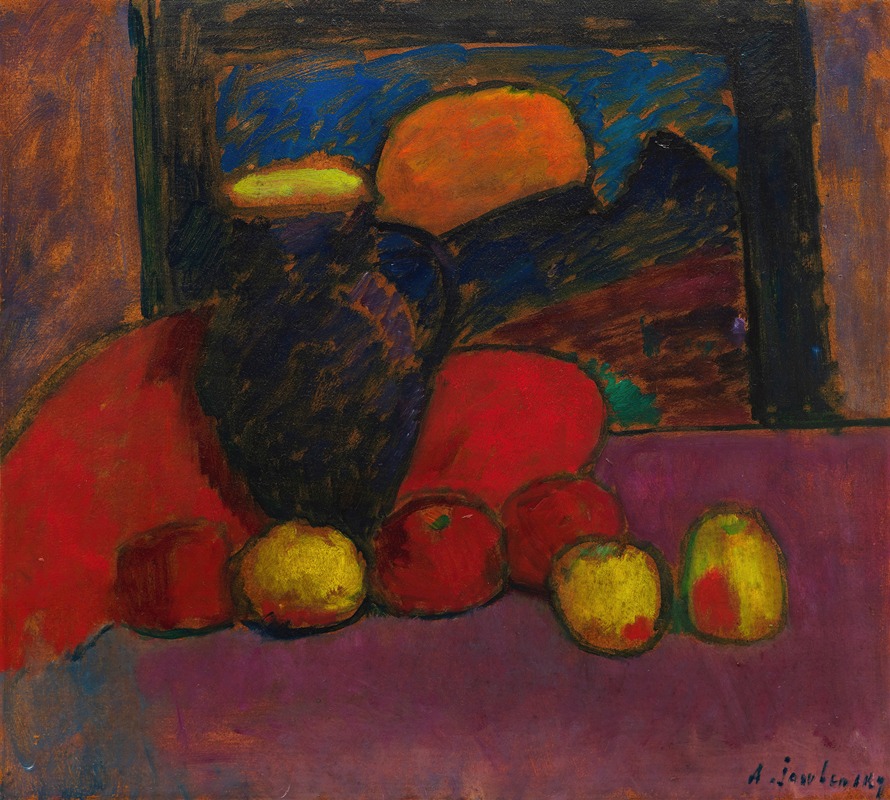
Stillleben
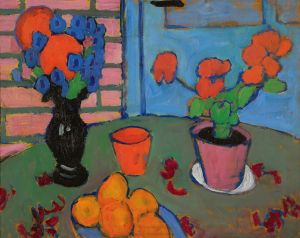
A hand-painted replica of Alexej von Jawlensky’s masterpiece Stillleben, meticulously crafted by professional artists to capture the true essence of the original. Each piece is created with museum-quality canvas and rare mineral pigments, carefully painted by experienced artists with delicate brushstrokes and rich, layered colors to perfectly recreate the texture of the original artwork. Unlike machine-printed reproductions, this hand-painted version brings the painting to life, infused with the artist’s emotions and skill in every stroke. Whether for personal collection or home decoration, it instantly elevates the artistic atmosphere of any space.
Alexej von Jawlensky was a Russian expressionist painter, known for his vivid use of color and bold compositions. He was a key figure in the development of expressionism in the early 20th century, and his works often reflect a deep exploration of spirituality and emotion through the medium of painting. One of his notable works is "Stillleben," which translates to "Still Life" in English.
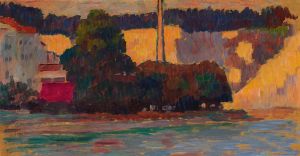
"Stillleben" by Alexej von Jawlensky is a painting that exemplifies his unique approach to still life, a genre that has been explored by many artists throughout history. Jawlensky's interpretation of still life is characterized by his expressionist style, which emphasizes the emotional and spiritual dimensions of the subject matter rather than a mere representation of objects.
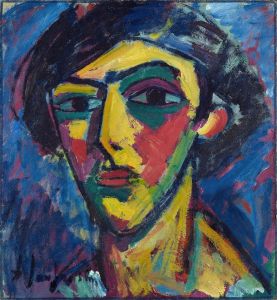
Jawlensky was influenced by various art movements and artists throughout his career, including Impressionism, Fauvism, and the works of Vincent van Gogh and Henri Matisse. These influences are evident in his use of vibrant colors and dynamic brushstrokes, which bring a sense of life and energy to his still life compositions. Unlike traditional still life paintings that focus on realistic depictions of objects, Jawlensky's "Stillleben" is more concerned with the interplay of color and form, creating a composition that is both visually striking and emotionally resonant.
The painting likely features a selection of everyday objects, such as fruits, flowers, or vases, arranged in a way that allows Jawlensky to explore the relationships between colors and shapes. His use of bold, contrasting colors and simplified forms is a hallmark of his style, and it serves to convey a sense of harmony and balance within the composition. This approach reflects Jawlensky's belief in the spiritual power of art and its ability to transcend the mundane aspects of life.
Jawlensky's "Stillleben" can be seen as part of his broader artistic journey, which was marked by a continuous search for spiritual and emotional expression through art. Throughout his career, he was associated with several influential art groups, including the Blue Rider (Der Blaue Reiter), which he co-founded with Wassily Kandinsky and other artists. This group was instrumental in the development of expressionism and sought to explore the spiritual dimensions of art through abstraction and color.
In summary, "Stillleben" by Alexej von Jawlensky is a significant work that reflects the artist's expressionist style and his interest in the spiritual and emotional potential of art. Through his use of vibrant colors and dynamic compositions, Jawlensky transforms the traditional still life into a powerful expression of his artistic vision. His work continues to be celebrated for its innovative approach and its contribution to the development of modern art.