Three Acrobats
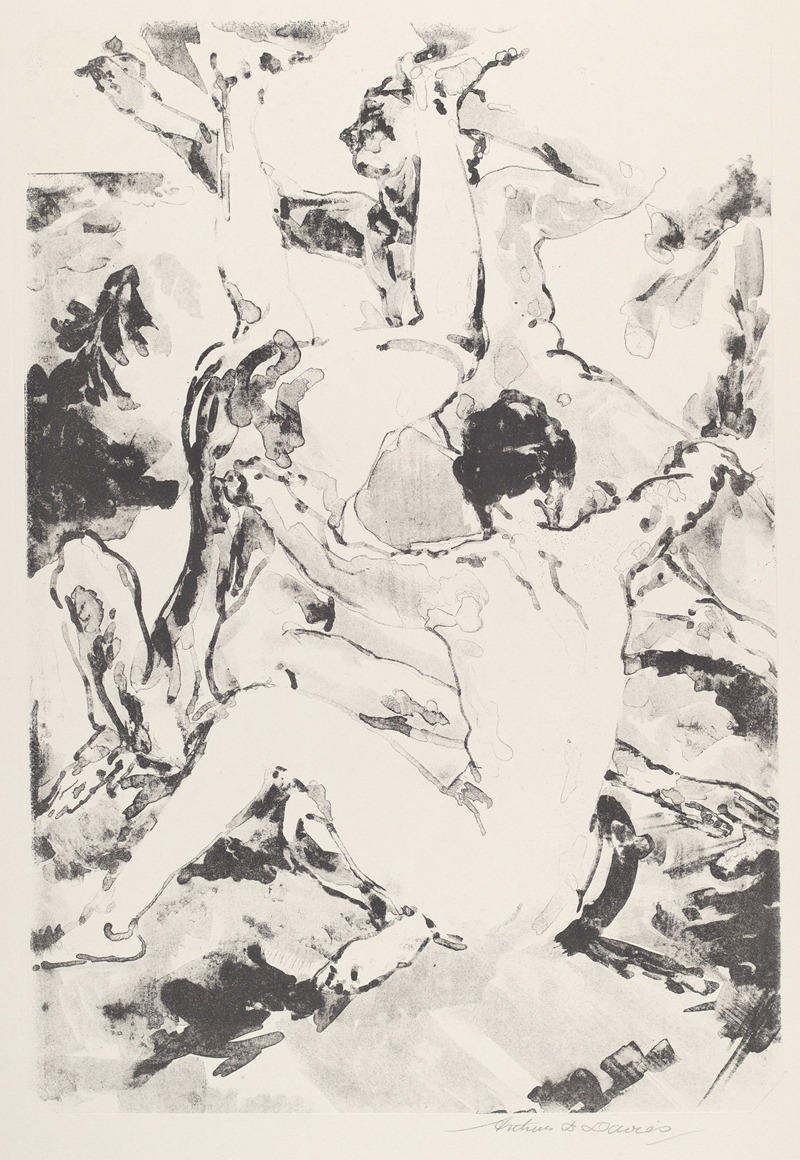
A hand-painted replica of Arthur Bowen Davies’s masterpiece Three Acrobats, meticulously crafted by professional artists to capture the true essence of the original. Each piece is created with museum-quality canvas and rare mineral pigments, carefully painted by experienced artists with delicate brushstrokes and rich, layered colors to perfectly recreate the texture of the original artwork. Unlike machine-printed reproductions, this hand-painted version brings the painting to life, infused with the artist’s emotions and skill in every stroke. Whether for personal collection or home decoration, it instantly elevates the artistic atmosphere of any space.
Arthur Bowen Davies was an American artist known for his contributions to the American art scene in the late 19th and early 20th centuries. He was a pivotal figure in the development of modern art in the United States and played a significant role in organizing the groundbreaking 1913 Armory Show, which introduced American audiences to European avant-garde art. One of his notable works is "Three Acrobats," a painting that exemplifies his unique style and thematic interests.
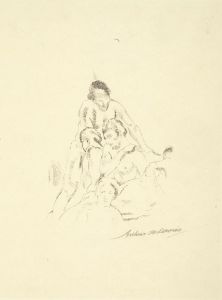
"Three Acrobats" is a work that captures Davies' fascination with the human form and movement, themes that recur throughout his oeuvre. Although specific details about the creation date and current location of "Three Acrobats" are not widely documented, the painting is representative of Davies' broader artistic interests and techniques.
Davies often depicted ethereal and dreamlike scenes, frequently incorporating figures such as dancers, acrobats, and mythological beings. His style is characterized by a blend of realism and symbolism, often with a focus on the graceful and fluid movement of the human body. In "Three Acrobats," Davies likely explores these themes by portraying acrobatic figures in dynamic poses, capturing a sense of motion and balance.
The painting reflects Davies' interest in the intersection of art and performance, a theme that aligns with his broader body of work. He was known for his ability to convey a sense of rhythm and harmony in his compositions, often drawing inspiration from classical art and mythology. This approach is evident in "Three Acrobats," where the figures might be depicted in a harmonious and balanced composition, emphasizing their physical prowess and the beauty of their movements.
Davies' work, including "Three Acrobats," is often noted for its use of soft, muted colors and delicate brushwork. This technique contributes to the dreamlike quality of his paintings, creating an atmosphere that is both serene and otherworldly. His ability to blend elements of realism with a more symbolic and abstract approach allows viewers to engage with his work on multiple levels, appreciating both the technical skill and the thematic depth.
Throughout his career, Arthur Bowen Davies was associated with various art movements and groups, including the Symbolists and the Ashcan School, although his work often defied easy categorization. His involvement in the Armory Show of 1913 was particularly significant, as it helped to introduce American audiences to modern European artists such as Marcel Duchamp and Henri Matisse. This exposure had a lasting impact on the development of modern art in the United States, and Davies' role as an organizer and exhibitor at the show underscores his importance in the art world of his time.
In summary, "Three Acrobats" by Arthur Bowen Davies is a painting that encapsulates the artist's interest in the human form, movement, and the intersection of art and performance. While specific details about the painting are limited, it remains an important example of Davies' contribution to American art and his role in the broader context of early 20th-century modernism.