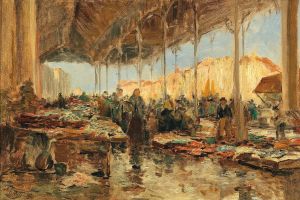
Der Kürbisgarten
A hand-painted replica of August von Pettenkofen’s masterpiece Der Kürbisgarten, meticulously crafted by professional artists to capture the true essence of the original. Each piece is created with museum-quality canvas and rare mineral pigments, carefully painted by experienced artists with delicate brushstrokes and rich, layered colors to perfectly recreate the texture of the original artwork. Unlike machine-printed reproductions, this hand-painted version brings the painting to life, infused with the artist’s emotions and skill in every stroke. Whether for personal collection or home decoration, it instantly elevates the artistic atmosphere of any space.
August von Pettenkofen was an Austrian painter known for his genre scenes and depictions of rural life. One of his notable works is "Der Kürbisgarten," which translates to "The Pumpkin Garden." Pettenkofen was born in Vienna in 1822 and became a prominent figure in the 19th-century Austrian art scene. He studied at the Academy of Fine Arts in Vienna and was influenced by the Biedermeier style, which emphasized realism and detail in everyday subjects.
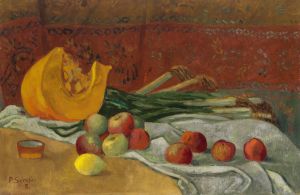
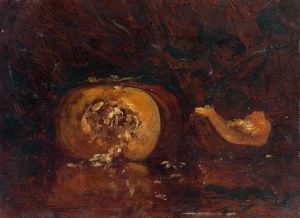
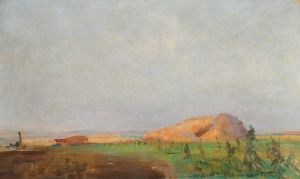
"Der Kürbisgarten" exemplifies Pettenkofen's focus on rural themes and his ability to capture the essence of peasant life. The painting is characterized by its attention to detail and the use of light and shadow to create a realistic depiction of a garden filled with pumpkins. Pettenkofen's work often reflects his travels and experiences in Hungary, where he spent considerable time and drew inspiration from the local landscapes and people.
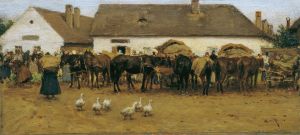
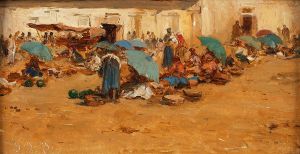
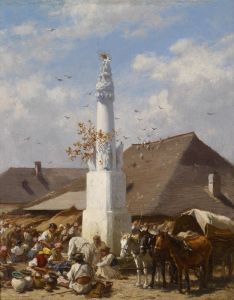
The painting likely portrays a scene from a Hungarian village, as Pettenkofen was known for his frequent visits to the region, particularly to the town of Szolnok. This area was a significant source of inspiration for him, and he became associated with the Szolnok Art Colony, a group of artists who gathered there to paint and share ideas. His works from this period often depict the everyday lives of Hungarian peasants, capturing their customs, attire, and environments with authenticity and respect.
Pettenkofen's style is marked by a warm color palette and a keen eye for the nuances of light, which he used to bring his scenes to life. In "Der Kürbisgarten," these elements combine to create a serene and inviting atmosphere, drawing the viewer into the tranquil world of the rural garden. The pumpkins, a central feature of the painting, are rendered with meticulous detail, showcasing Pettenkofen's skill in still life as well as his broader interest in genre painting.
Throughout his career, Pettenkofen received numerous accolades for his work, including being appointed a member of the Vienna Academy and receiving the Order of Franz Joseph. His paintings were well-received in his lifetime and continue to be appreciated for their historical and artistic value. "Der Kürbisgarten," like many of his works, offers a glimpse into the 19th-century rural life and reflects the artist's deep connection to the landscapes and people he portrayed.
Today, Pettenkofen's works are held in various collections, including museums in Austria and Hungary, where they continue to be studied and admired for their contribution to the genre of 19th-century European painting. His legacy is that of an artist who captured the spirit of his time with sensitivity and precision, providing valuable insights into the cultural and social fabric of the regions he depicted.