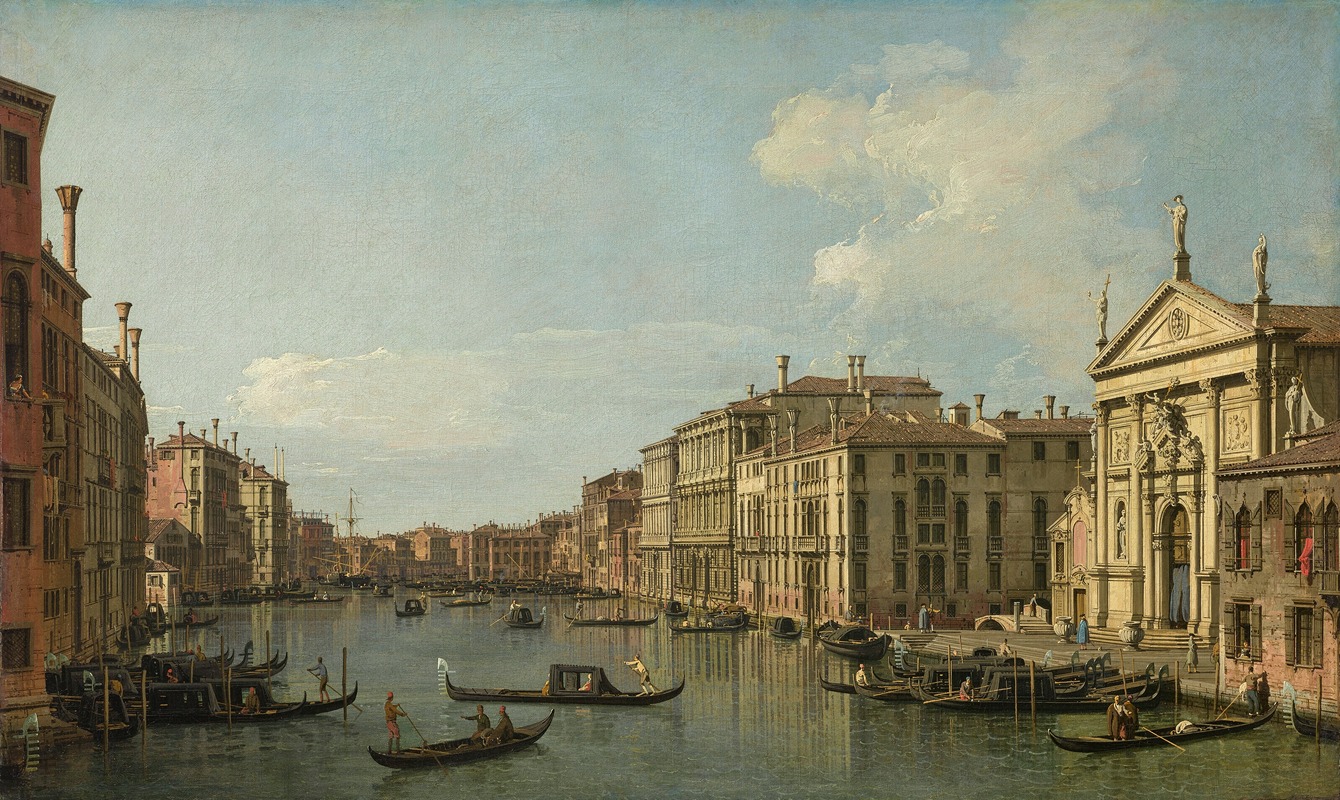
The Grand Canal, Venice, Looking South-East from San Stae to the Fabbriche Nuove di Rialto
A hand-painted replica of Canaletto’s masterpiece The Grand Canal, Venice, Looking South-East from San Stae to the Fabbriche Nuove di Rialto, meticulously crafted by professional artists to capture the true essence of the original. Each piece is created with museum-quality canvas and rare mineral pigments, carefully painted by experienced artists with delicate brushstrokes and rich, layered colors to perfectly recreate the texture of the original artwork. Unlike machine-printed reproductions, this hand-painted version brings the painting to life, infused with the artist’s emotions and skill in every stroke. Whether for personal collection or home decoration, it instantly elevates the artistic atmosphere of any space.
"The Grand Canal, Venice, Looking South-East from San Stae to the Fabbriche Nuove di Rialto" is a renowned painting by the Italian artist Giovanni Antonio Canal, better known as Canaletto. This artwork is a quintessential example of Canaletto's mastery in capturing the grandeur and intricate details of Venice's urban landscape during the 18th century.
Canaletto, born in 1697 in Venice, was a prominent figure in the Venetian school of painting. He is best known for his vedute, or cityscapes, which vividly depict the architecture and daily life of Venice. His works are celebrated for their precision, clarity, and the ability to convey the bustling atmosphere of the city. Canaletto's paintings were highly sought after by collectors, particularly British aristocrats who were captivated by the allure of Venice during their Grand Tours of Europe.
This particular painting, "The Grand Canal, Venice, Looking South-East from San Stae to the Fabbriche Nuove di Rialto," exemplifies Canaletto's skill in rendering architectural detail and his keen observation of light and shadow. The Grand Canal, often referred to as the main artery of Venice, is depicted with meticulous attention to the buildings lining its banks. The view stretches from the Church of San Stae, a notable Baroque structure, towards the Fabbriche Nuove di Rialto, an area known for its commercial activity and proximity to the famous Rialto Bridge.
In the painting, Canaletto captures the dynamic interplay of light on the water and the facades of the buildings, creating a sense of depth and movement. The composition is carefully structured, with the canal leading the viewer's eye through the scene, while the bustling activity of gondolas and boats adds life to the tranquil waters. The artist's use of a high vantage point allows for a panoramic view, showcasing the architectural splendor and vibrant life of Venice.
Canaletto's work is characterized by its accuracy and attention to detail, often achieved through the use of a camera obscura, a device that helped him capture precise perspectives. This technique, combined with his artistic skill, enabled him to produce paintings that were both realistic and imbued with a sense of grandeur.
The painting is part of a larger body of work by Canaletto that celebrates the beauty and uniqueness of Venice. His depictions of the city have played a significant role in shaping the perception of Venice as a place of romance and architectural wonder. Today, Canaletto's paintings are held in high esteem and are featured in major art collections and museums around the world, where they continue to be admired for their artistic excellence and historical significance.
Through "The Grand Canal, Venice, Looking South-East from San Stae to the Fabbriche Nuove di Rialto," Canaletto offers viewers a glimpse into the vibrant life of 18th-century Venice, capturing the essence of a city that has long fascinated artists, writers, and travelers alike.