Polichinelle
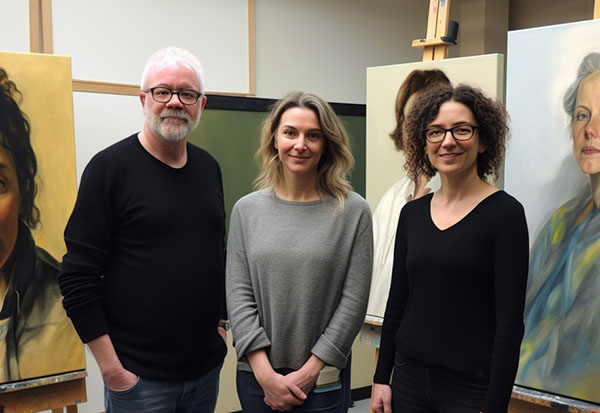
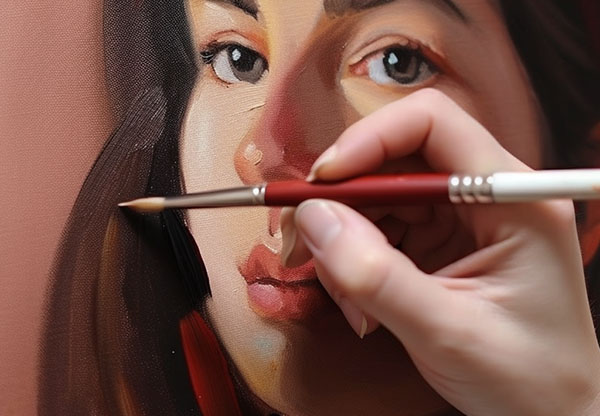
A hand-painted replica of Édouard Manet’s masterpiece Polichinelle, meticulously crafted by professional artists to capture the true essence of the original. Each piece is created with museum-quality canvas and rare mineral pigments, carefully painted by experienced artists with delicate brushstrokes and rich, layered colors to perfectly recreate the texture of the original artwork. Unlike machine-printed reproductions, this hand-painted version brings the painting to life, infused with the artist’s emotions and skill in every stroke. Whether for personal collection or home decoration, it instantly elevates the artistic atmosphere of any space.
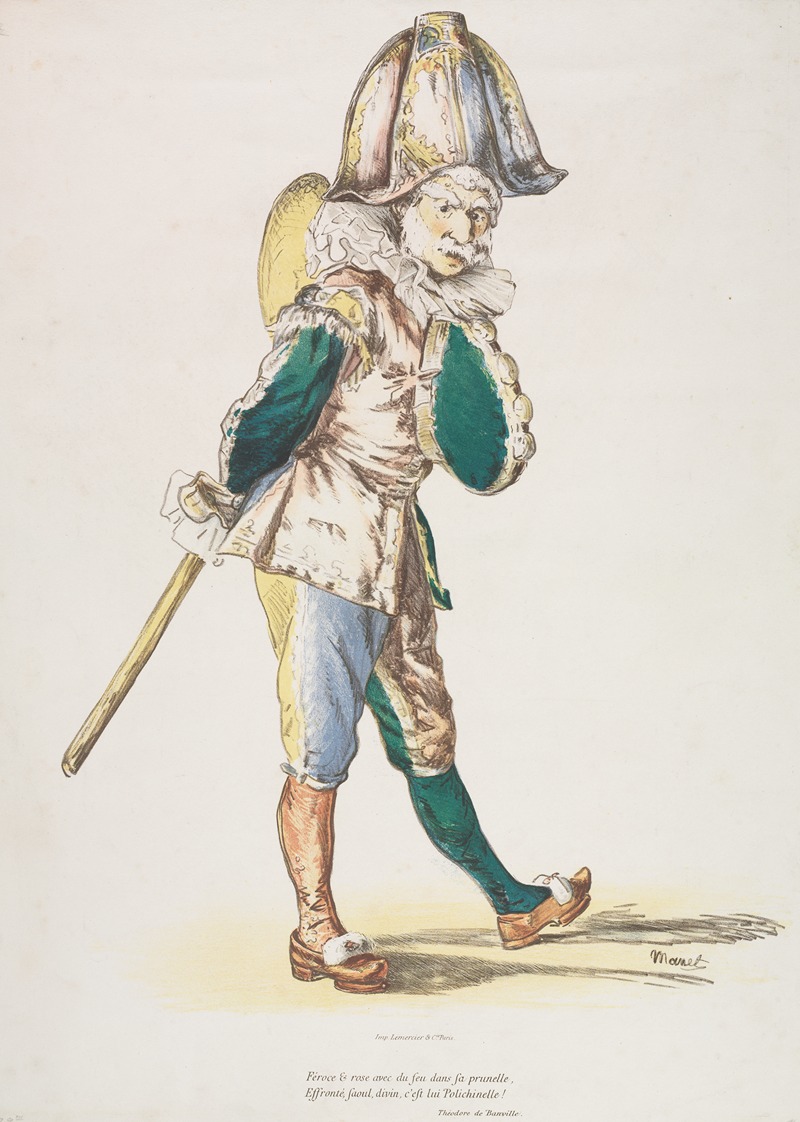
Édouard Manet, a pivotal figure in the transition from Realism to Impressionism, painted "Polichinelle" in 1873. This work is a testament to Manet's fascination with theatrical subjects and his innovative approach to capturing modern life. "Polichinelle" depicts a character from the traditional Italian commedia dell'arte, known for its stock characters and improvisational style. Polichinelle, or Punchinello in English, is a classic figure characterized by his hunchback, hooked nose, and mischievous nature, often serving as a symbol of satire and social commentary.
Manet's "Polichinelle" is notable for its vibrant use of color and dynamic composition, which reflect the artist's interest in capturing movement and emotion. The painting showcases Manet's skillful brushwork and his ability to convey the essence of his subjects with minimal detail. The character of Polichinelle is depicted in a lively pose, suggesting a moment of performance or interaction, which is consistent with the theatrical origins of the character.
The painting is part of a broader series of works by Manet that explore themes of performance and spectacle, aligning with the artist's broader interest in the social and cultural life of Paris. During the 19th century, Paris was a hub of artistic and cultural activity, and the commedia dell'arte was a popular form of entertainment. Manet's choice to depict Polichinelle can be seen as a reflection of this cultural milieu, as well as his interest in the intersection of art and life.
"Polichinelle" also exemplifies Manet's departure from the more traditional, academic styles of painting that dominated the art world at the time. Instead of adhering to the strict rules of composition and subject matter, Manet embraced a more modern approach, focusing on contemporary themes and everyday life. This approach was influential in the development of Impressionism, as it encouraged other artists to explore new techniques and subjects.
The painting is housed in the Musée d'Orsay in Paris, which holds a significant collection of Manet's works. The museum is renowned for its extensive collection of 19th-century art, particularly works from the Impressionist and Post-Impressionist movements. "Polichinelle" is an important piece within this collection, as it highlights Manet's role in the evolution of modern art and his impact on subsequent generations of artists.
Manet's work, including "Polichinelle," continues to be studied and admired for its innovative approach and its ability to capture the spirit of its time. The painting remains a valuable example of Manet's contribution to the art world and his enduring influence on the development of modern art. Through his exploration of theatrical subjects and his modernist techniques, Manet paved the way for future artists to break free from traditional constraints and to explore new artistic possibilities.