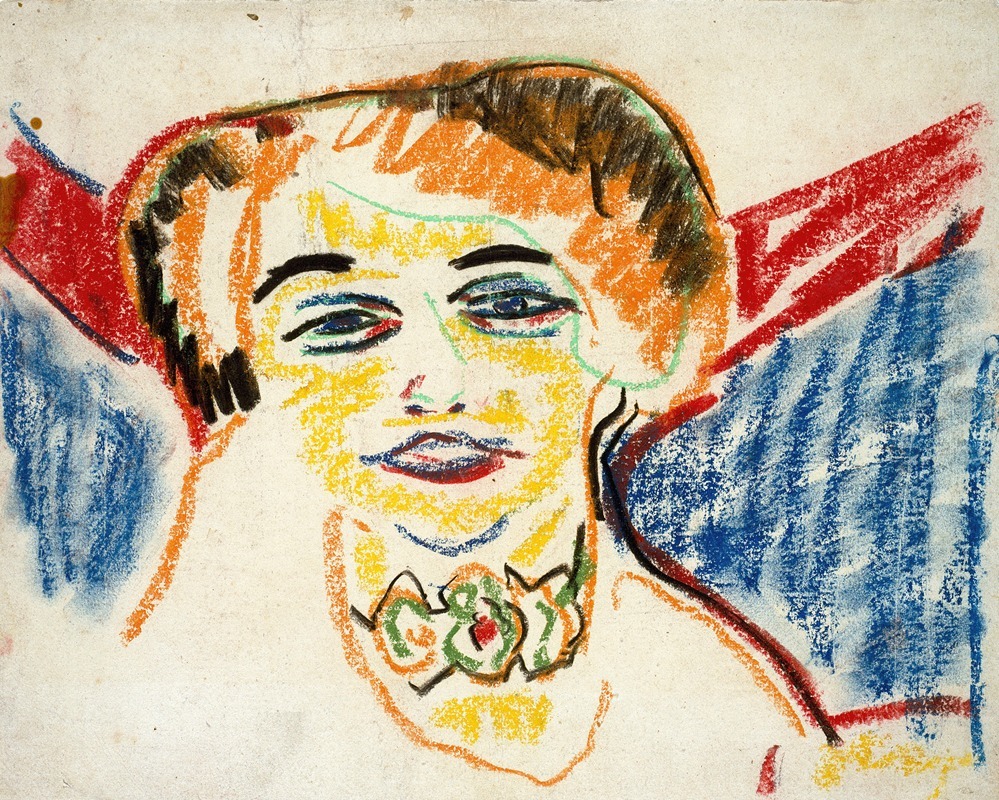
Head of a Woman
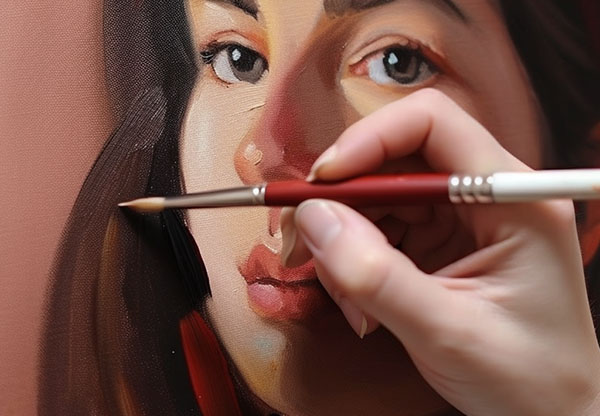
A hand-painted replica of Ernst Ludwig Kirchner’s masterpiece Head of a Woman, meticulously crafted by professional artists to capture the true essence of the original. Each piece is created with museum-quality canvas and rare mineral pigments, carefully painted by experienced artists with delicate brushstrokes and rich, layered colors to perfectly recreate the texture of the original artwork. Unlike machine-printed reproductions, this hand-painted version brings the painting to life, infused with the artist’s emotions and skill in every stroke. Whether for personal collection or home decoration, it instantly elevates the artistic atmosphere of any space.
"Head of a Woman" is a painting by the German expressionist artist Ernst Ludwig Kirchner, a prominent figure in the early 20th-century art movement known as Die Brücke (The Bridge). Kirchner, born in 1880 in Aschaffenburg, Germany, was a leading force in the development of Expressionism, a style characterized by its emphasis on representing emotional experiences rather than physical reality.
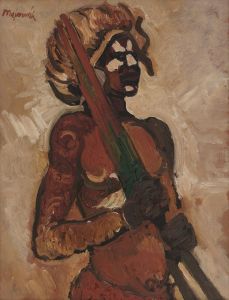
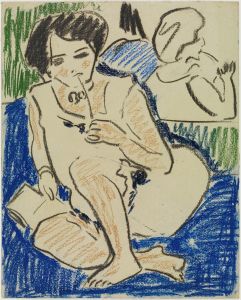
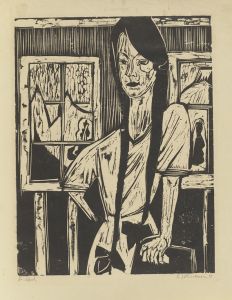
Kirchner's work often explored themes of modernity, urban life, and the human condition, frequently employing bold colors and dynamic compositions. "Head of a Woman" exemplifies these characteristics, showcasing Kirchner's distinctive approach to portraiture. The painting is noted for its vivid use of color and expressive brushwork, which together convey a sense of psychological depth and intensity.
The subject of "Head of a Woman" is depicted with exaggerated features and a striking palette, typical of Kirchner's style. This approach reflects the influence of non-Western art, particularly African and Oceanic art, which Kirchner and his contemporaries admired for its perceived authenticity and emotional power. The painting's abstracted forms and vibrant colors are also indicative of Kirchner's interest in capturing the inner essence of his subjects rather than adhering to traditional representational techniques.
Kirchner's involvement with Die Brücke, which he co-founded in 1905 with fellow artists Fritz Bleyl, Erich Heckel, and Karl Schmidt-Rottluff, was instrumental in the development of his artistic style. The group sought to create a new artistic language that bridged the past and the future, drawing inspiration from a variety of sources, including medieval art, German woodcuts, and the works of Vincent van Gogh and Edvard Munch. This eclectic mix of influences is evident in "Head of a Woman," where Kirchner's innovative use of line and color creates a sense of movement and vitality.
Throughout his career, Kirchner faced numerous challenges, including the upheaval of World War I and the subsequent political and social changes in Germany. His work was later condemned by the Nazi regime, which labeled it as "degenerate art," leading to the removal of many of his pieces from German museums. Despite these setbacks, Kirchner continued to produce art that pushed the boundaries of expression and form.
"Head of a Woman" is part of Kirchner's broader oeuvre, which includes paintings, prints, and sculptures. His work has been celebrated for its contribution to modern art and its ability to convey the complexities of human emotion and experience. Today, Kirchner's paintings are held in major collections worldwide, and his influence can be seen in the work of subsequent generations of artists.
In summary, "Head of a Woman" is a testament to Ernst Ludwig Kirchner's innovative spirit and his role as a pioneer of Expressionism. Through its bold colors and expressive forms, the painting captures the essence of Kirchner's artistic vision and his enduring impact on the world of art.