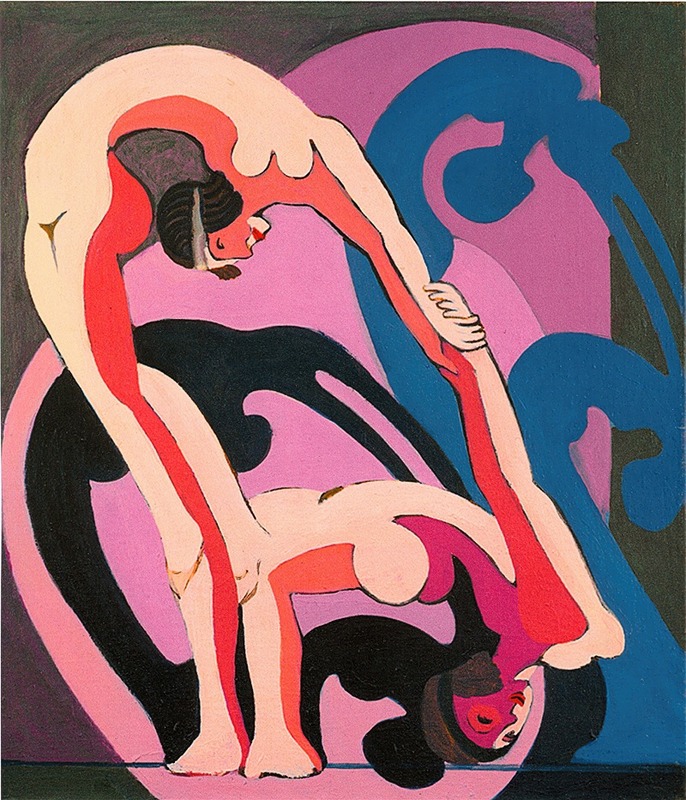
two acrobats
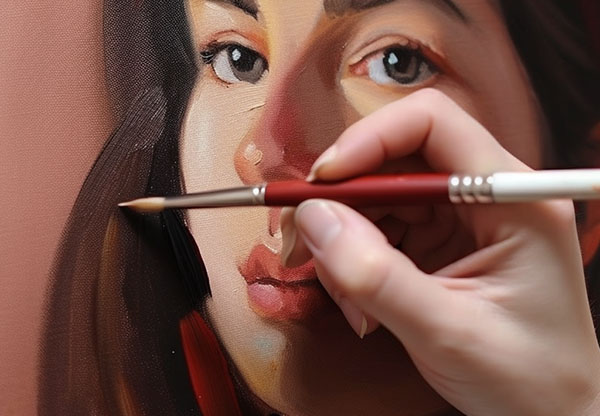
A hand-painted replica of Ernst Ludwig Kirchner’s masterpiece two acrobats, meticulously crafted by professional artists to capture the true essence of the original. Each piece is created with museum-quality canvas and rare mineral pigments, carefully painted by experienced artists with delicate brushstrokes and rich, layered colors to perfectly recreate the texture of the original artwork. Unlike machine-printed reproductions, this hand-painted version brings the painting to life, infused with the artist’s emotions and skill in every stroke. Whether for personal collection or home decoration, it instantly elevates the artistic atmosphere of any space.
Ernst Ludwig Kirchner, a prominent German expressionist painter, created "Two Acrobats" during a period marked by significant artistic exploration and innovation. Kirchner was a founding member of the influential art group Die Brücke (The Bridge), which played a crucial role in the development of Expressionism in the early 20th century. This movement sought to convey emotional experience rather than physical reality, often through vivid colors and dynamic compositions.
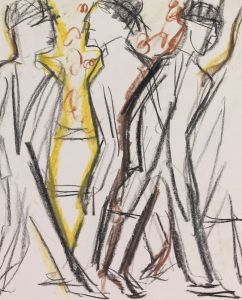
"Two Acrobats" exemplifies Kirchner's distinctive style, characterized by bold colors, dynamic forms, and a sense of movement. The painting captures the energy and vitality of its subjects, reflecting Kirchner's interest in the human figure and the modern urban experience. His work often depicted scenes of contemporary life, including street scenes, cabaret dancers, and performers, which were common themes among the Expressionists who aimed to capture the spirit of their time.
In "Two Acrobats," Kirchner employs a vibrant color palette and exaggerated forms to convey the dynamism and physicality of the acrobats. The figures are rendered with elongated limbs and angular poses, emphasizing their agility and grace. This stylistic approach is typical of Kirchner's work, where he often distorted forms to enhance emotional impact and express the inner essence of his subjects.
Kirchner's interest in acrobats and performers can be linked to his fascination with the bohemian lifestyle and the avant-garde culture of early 20th-century Europe. The acrobats, with their daring feats and theatrical presence, embody the excitement and unpredictability of modern life, themes that resonated deeply with Kirchner and his contemporaries.
The painting also reflects Kirchner's broader artistic influences, including African and Oceanic art, which he admired for their perceived authenticity and emotional directness. These influences are evident in the simplified forms and bold outlines that characterize much of his work, including "Two Acrobats."
Throughout his career, Kirchner faced numerous personal and professional challenges, including the trauma of World War I and struggles with mental health. Despite these difficulties, he remained a prolific artist, producing a significant body of work that continues to be celebrated for its innovation and emotional depth.
"Two Acrobats" is a testament to Kirchner's ability to capture the essence of his subjects through expressive forms and vibrant colors. It reflects both his personal artistic vision and the broader cultural currents of his time. Today, Kirchner's work, including "Two Acrobats," is held in high regard, with pieces featured in major art collections and exhibitions worldwide, underscoring his lasting impact on the world of modern art.