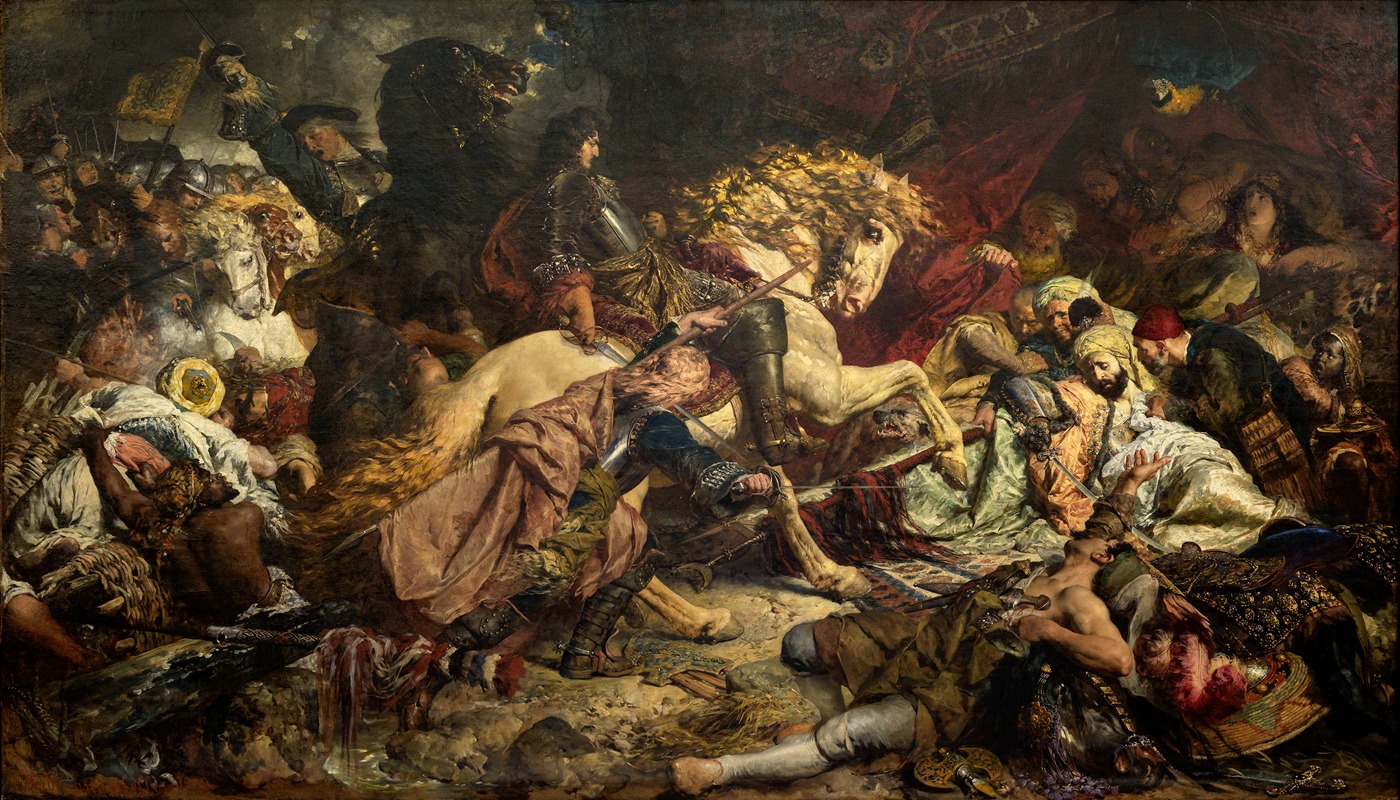
Türkenlouis
A hand-painted replica of Ferdinand Keller’s masterpiece Türkenlouis, meticulously crafted by professional artists to capture the true essence of the original. Each piece is created with museum-quality canvas and rare mineral pigments, carefully painted by experienced artists with delicate brushstrokes and rich, layered colors to perfectly recreate the texture of the original artwork. Unlike machine-printed reproductions, this hand-painted version brings the painting to life, infused with the artist’s emotions and skill in every stroke. Whether for personal collection or home decoration, it instantly elevates the artistic atmosphere of any space.
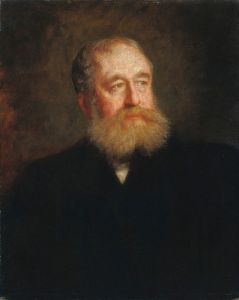
"Türkenlouis" is a painting by the German artist Ferdinand Keller, created in 1879. The painting depicts the Margrave of Baden, Louis William, who was also known by the nickname "Türkenlouis" (Turkish Louis). This nickname was earned due to his military campaigns against the Ottoman Empire during the late 17th and early 18th centuries. Louis William was a prominent figure in the Holy Roman Empire's military efforts to repel Ottoman advances into Europe.
Ferdinand Keller, born in 1842 in Karlsruhe, Germany, was a notable painter of the 19th century, known for his historical and genre scenes. He studied at the Academy of Fine Arts in Karlsruhe and later in Munich, where he developed his skills and style. Keller's works often reflected historical themes, and "Türkenlouis" is a prime example of his interest in depicting significant historical figures and events.
The painting "Türkenlouis" captures Louis William in a commanding pose, dressed in military regalia, symbolizing his role as a military leader. The background of the painting includes elements that suggest his involvement in the wars against the Ottoman Empire, such as battle scenes or landscapes reminiscent of the regions where he fought. Keller's attention to detail and use of color help to convey the power and determination of Louis William as a military commander.
Louis William of Baden-Baden was born in 1655 and became the Margrave of Baden in 1677. He is best known for his role in the Great Turkish War (1683-1699), where he served as a commander in the Imperial Army of the Holy Roman Empire. His most notable achievements include his participation in the Battle of Vienna in 1683, where the Ottoman siege was lifted, and his subsequent campaigns in Hungary and the Balkans. His efforts were instrumental in pushing back the Ottoman forces and securing the borders of the Holy Roman Empire.
The painting "Türkenlouis" by Ferdinand Keller not only serves as a tribute to Louis William's military accomplishments but also reflects the 19th-century German interest in national history and heroism. During this period, there was a growing fascination with historical figures who had played significant roles in shaping the nation's past. Keller's work fits within this context, celebrating a figure who was seen as a defender of Christendom and a symbol of military prowess.
"Türkenlouis" remains an important piece in the oeuvre of Ferdinand Keller and is a valuable representation of 19th-century historical painting. It provides insight into the way historical figures were commemorated and the artistic techniques used to convey their legacy. The painting is housed in the Staatliche Kunsthalle Karlsruhe, where it continues to be appreciated by art enthusiasts and historians alike.