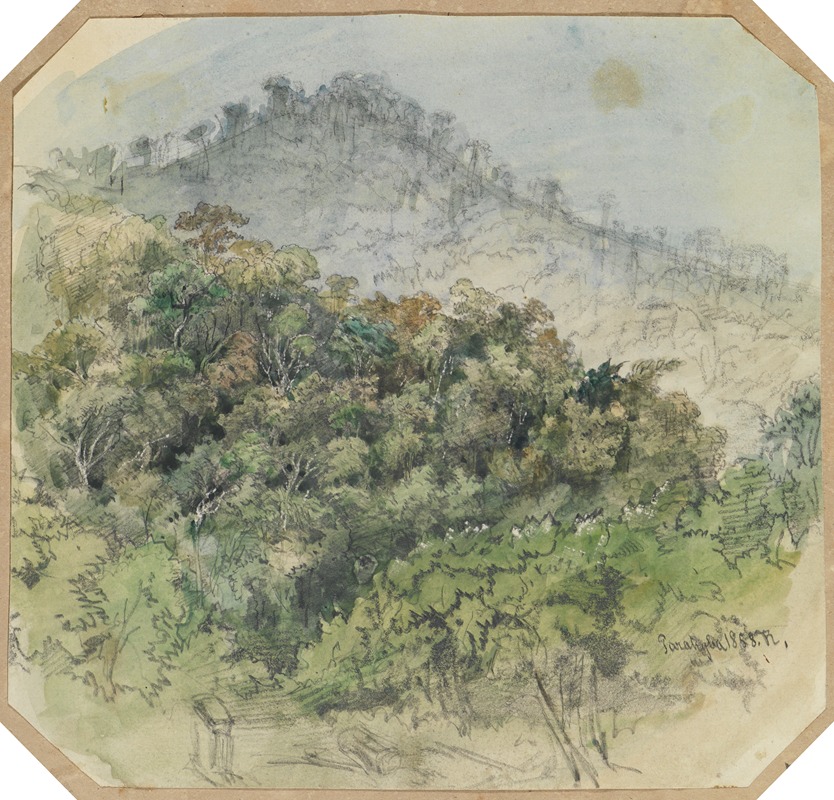
Urwaldansicht in den Bergen
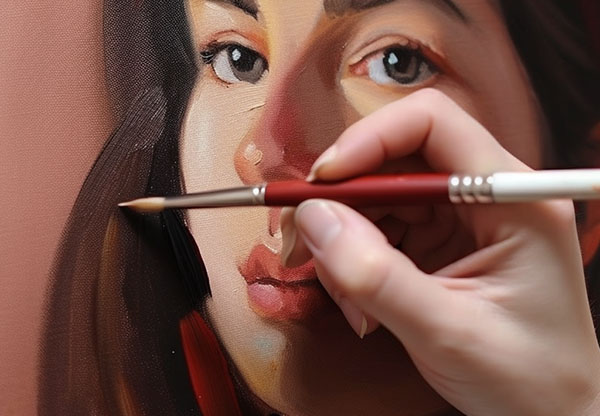
A hand-painted replica of Ferdinand Keller’s masterpiece Urwaldansicht in den Bergen, meticulously crafted by professional artists to capture the true essence of the original. Each piece is created with museum-quality canvas and rare mineral pigments, carefully painted by experienced artists with delicate brushstrokes and rich, layered colors to perfectly recreate the texture of the original artwork. Unlike machine-printed reproductions, this hand-painted version brings the painting to life, infused with the artist’s emotions and skill in every stroke. Whether for personal collection or home decoration, it instantly elevates the artistic atmosphere of any space.
Ferdinand Keller was a notable German painter of the 19th century, recognized for his contributions to historical and landscape painting. Born on August 5, 1842, in Karlsruhe, Germany, Keller developed a keen interest in art from a young age. He pursued his studies at the Academy of Fine Arts in Karlsruhe, where he was influenced by the Romantic movement and the works of other prominent artists of his time.
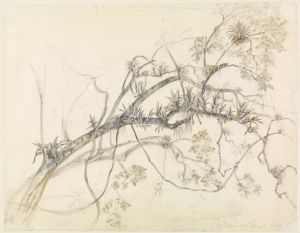
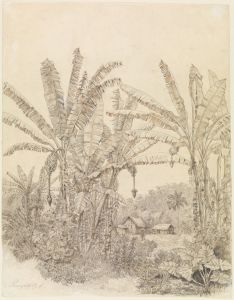
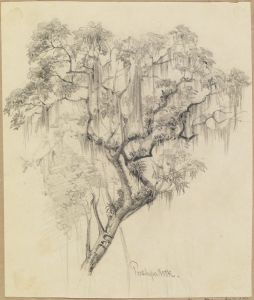
One of Keller's works, "Urwaldansicht in den Bergen," translates to "View of the Primeval Forest in the Mountains." This painting reflects Keller's fascination with nature and his ability to capture the grandeur and mystery of the natural world. While specific details about this painting are scarce, it is consistent with Keller's style, which often involved detailed and atmospheric depictions of landscapes.
Keller's landscapes are characterized by their dramatic use of light and shadow, as well as their meticulous attention to detail. He had a unique ability to convey the mood and atmosphere of a scene, drawing viewers into the serene yet powerful world of nature. "Urwaldansicht in den Bergen" likely showcases these qualities, presenting a view of an untouched, primeval forest set against a mountainous backdrop.
Throughout his career, Keller was known for his ability to blend realism with romanticism, creating works that were both true to life and imbued with a sense of wonder. His paintings often featured lush vegetation, towering trees, and expansive vistas, inviting viewers to appreciate the beauty and majesty of the natural environment.
In addition to landscapes, Keller also painted historical and mythological scenes, demonstrating his versatility as an artist. His works were well-received during his lifetime, earning him recognition and acclaim in the art community. Keller's contributions to art were significant, and his paintings continue to be appreciated for their technical skill and evocative imagery.
Keller spent much of his career in Karlsruhe, where he also served as a professor at the Academy of Fine Arts. He played a crucial role in shaping the next generation of artists, sharing his knowledge and passion for art with his students. His influence extended beyond his own works, as he helped to cultivate a vibrant artistic community in the region.
Ferdinand Keller passed away on July 8, 1922, leaving behind a legacy of remarkable paintings that continue to captivate audiences. His work, including "Urwaldansicht in den Bergen," remains a testament to his skill and vision as an artist, celebrating the beauty and mystery of the natural world.
While specific information about "Urwaldansicht in den Bergen" is limited, it is clear that the painting is a reflection of Keller's broader artistic themes and interests. His dedication to capturing the essence of nature and his ability to convey its splendor through his art have secured his place in the history of German painting.