La Belle Cuisinière
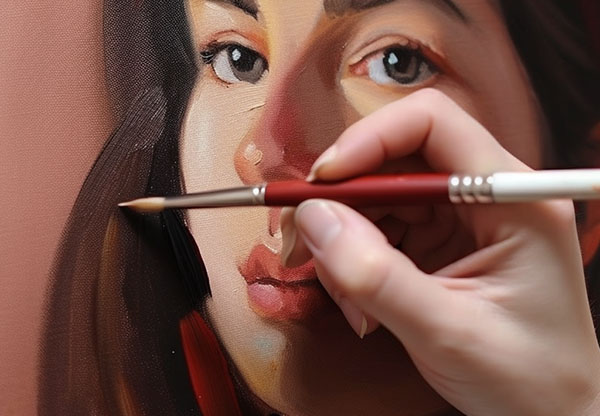
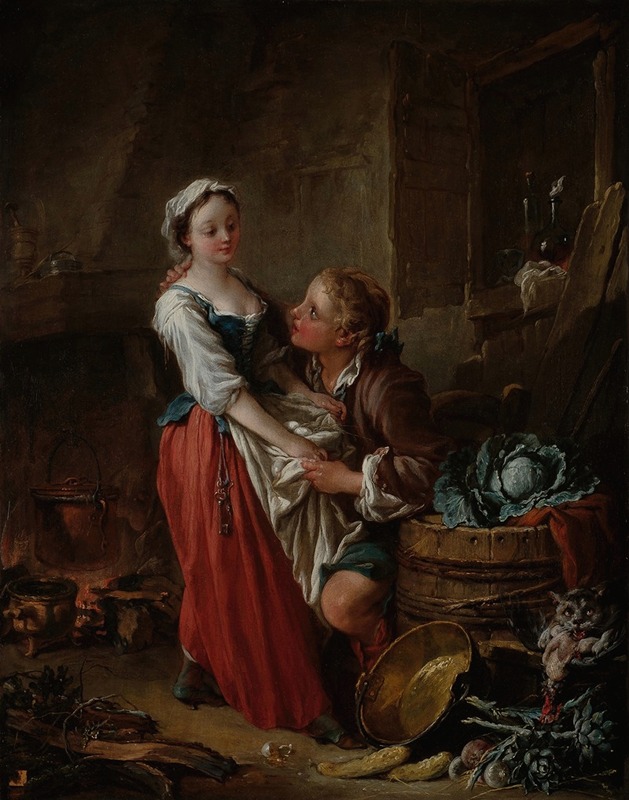
A hand-painted replica of François Boucher’s masterpiece La Belle Cuisinière, meticulously crafted by professional artists to capture the true essence of the original. Each piece is created with museum-quality canvas and rare mineral pigments, carefully painted by experienced artists with delicate brushstrokes and rich, layered colors to perfectly recreate the texture of the original artwork. Unlike machine-printed reproductions, this hand-painted version brings the painting to life, infused with the artist’s emotions and skill in every stroke. Whether for personal collection or home decoration, it instantly elevates the artistic atmosphere of any space.
François Boucher, a prominent French painter of the Rococo style, is celebrated for his idyllic and voluptuous paintings, which often depict classical themes, pastoral scenes, and sensuous figures. One of his works, "La Belle Cuisinière," exemplifies his mastery in capturing the charm and elegance of everyday life through the lens of Rococo aesthetics.
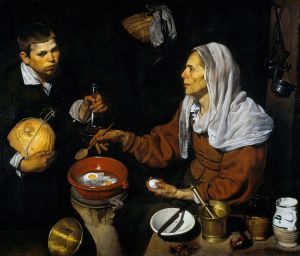
"La Belle Cuisinière," translated as "The Beautiful Cook," is a painting that showcases Boucher's skill in portraying domestic scenes with a touch of grace and allure. Although specific details about the painting's creation, such as its exact date and current location, are not widely documented, it is consistent with Boucher's thematic focus during the mid-18th century. This period was marked by a fascination with the leisurely and intimate aspects of life, often depicted with a playful and light-hearted approach.
In "La Belle Cuisinière," Boucher employs a soft color palette, typical of the Rococo style, characterized by pastel hues and delicate brushwork. This technique enhances the painting's gentle and inviting atmosphere. The composition likely features a young woman engaged in a culinary task, embodying both beauty and domesticity. Boucher's attention to detail in rendering textures, such as the fabric of clothing and the sheen of kitchenware, adds depth and realism to the scene.
The painting reflects the Rococo movement's emphasis on themes of pleasure, beauty, and the celebration of the senses. Boucher, like many of his contemporaries, was influenced by the cultural milieu of 18th-century France, where art was often used to depict the opulence and refinement of the aristocracy. His works, including "La Belle Cuisinière," often served as a form of escapism, offering viewers a glimpse into an idealized world of elegance and charm.
Boucher's influence extended beyond his paintings; he was also a significant figure in the decorative arts, contributing designs for tapestries, porcelain, and theater sets. His work was highly favored by patrons such as Madame de Pompadour, the chief mistress of King Louis XV, who was a notable supporter of the arts and an avid collector of Boucher's paintings.
While "La Belle Cuisinière" may not be as widely recognized as some of Boucher's other works, it remains a testament to his ability to capture the essence of the Rococo spirit. The painting exemplifies his talent for blending beauty with everyday life, creating scenes that are both enchanting and relatable.
In summary, François Boucher's "La Belle Cuisinière" is a fine example of Rococo art, showcasing the artist's skill in depicting domestic scenes with elegance and charm. Although specific details about the painting are limited, its thematic and stylistic elements align with Boucher's broader body of work, which continues to be celebrated for its contribution to the art of the 18th century.