Un Jardin À Trouville
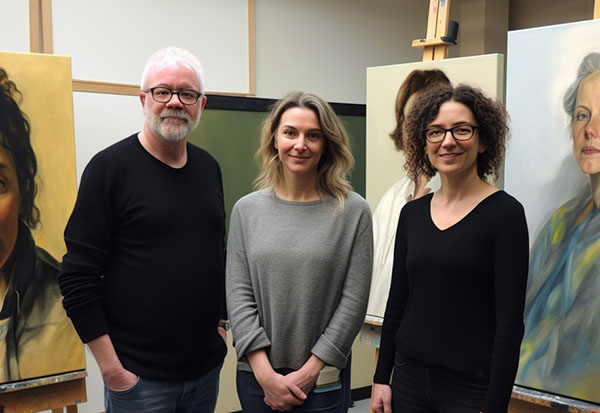
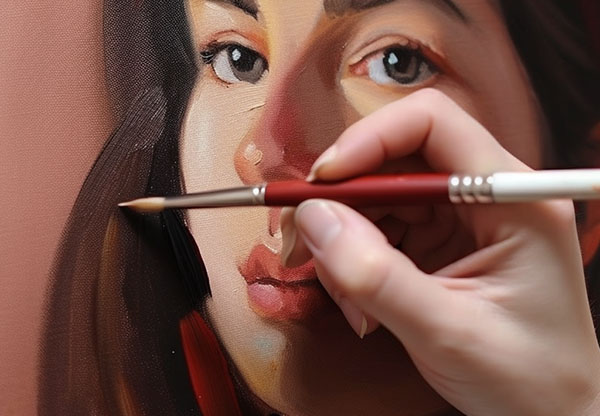
A hand-painted replica of Gustave Caillebotte’s masterpiece Un Jardin À Trouville, meticulously crafted by professional artists to capture the true essence of the original. Each piece is created with museum-quality canvas and rare mineral pigments, carefully painted by experienced artists with delicate brushstrokes and rich, layered colors to perfectly recreate the texture of the original artwork. Unlike machine-printed reproductions, this hand-painted version brings the painting to life, infused with the artist’s emotions and skill in every stroke. Whether for personal collection or home decoration, it instantly elevates the artistic atmosphere of any space.
Gustave Caillebotte, a prominent French painter associated with the Impressionist movement, created the painting "Un Jardin à Trouville" in 1884. This work is a testament to Caillebotte's unique approach to capturing light and atmosphere, as well as his interest in depicting modern life. Caillebotte, who was also an engineer and a passionate gardener, often drew inspiration from his surroundings, and this painting is no exception.
"Un Jardin à Trouville" translates to "A Garden in Trouville," indicating the setting of the painting. Trouville-sur-Mer is a coastal town in the Normandy region of France, known for its picturesque landscapes and as a popular resort destination during the 19th century. The town's natural beauty and leisurely atmosphere made it an attractive subject for many artists of the time, including Caillebotte.
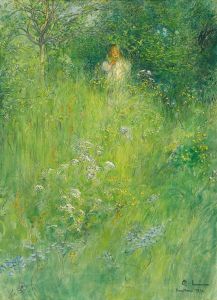
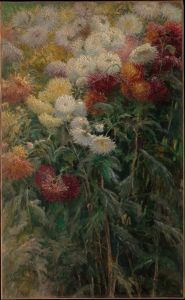
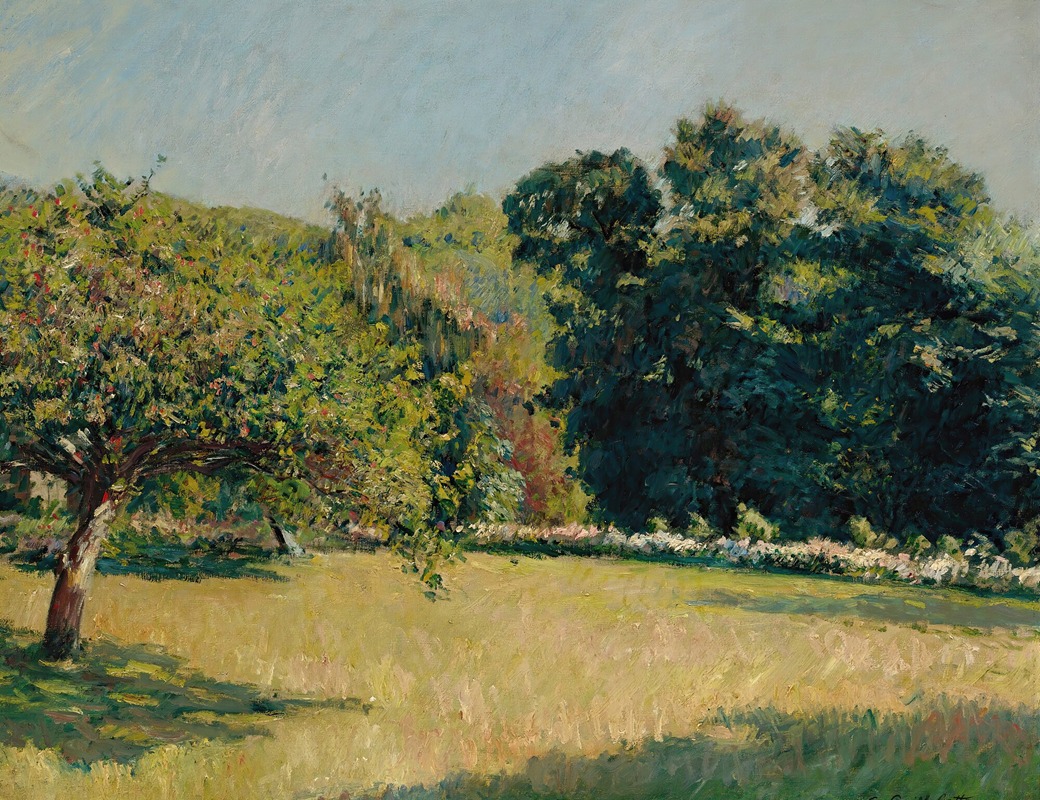
The painting depicts a serene garden scene, characterized by lush greenery and vibrant flowers, capturing the essence of a tranquil summer day. Caillebotte's use of color and light is particularly noteworthy, as he employs a palette that reflects the bright, sunlit environment. The composition is carefully structured, with a focus on the interplay of light and shadow, which adds depth and dimension to the scene.
Caillebotte's technique in "Un Jardin à Trouville" demonstrates his departure from the more traditional, academic styles of painting. Instead, he embraces the Impressionist approach, which emphasizes the effects of light and atmosphere over precise detail. This is evident in the loose brushwork and the way he captures the fleeting qualities of the natural world. The painting's overall effect is one of immediacy and spontaneity, inviting viewers to experience the garden as if they were standing within it.
In addition to his artistic contributions, Caillebotte played a significant role in supporting the Impressionist movement. He was a key figure in organizing and financing several Impressionist exhibitions, and he used his personal wealth to purchase works by his contemporaries, helping to establish the movement's reputation. His own works, including "Un Jardin à Trouville," reflect his commitment to exploring new artistic possibilities and capturing the modern experience.
Today, "Un Jardin à Trouville" is appreciated for its aesthetic qualities and its place within Caillebotte's oeuvre. The painting exemplifies his ability to blend elements of realism with the innovative techniques of Impressionism, resulting in a work that is both visually appealing and historically significant. Caillebotte's legacy as an artist and patron of the arts continues to be celebrated, and his paintings remain an important part of the Impressionist canon.
The painting is housed in a private collection, which limits public access but also underscores the value and desirability of Caillebotte's work among collectors. Despite this, "Un Jardin à Trouville" is recognized in art historical circles for its contribution to the understanding of Caillebotte's artistic development and the broader context of Impressionist art.