Saint Cecilia
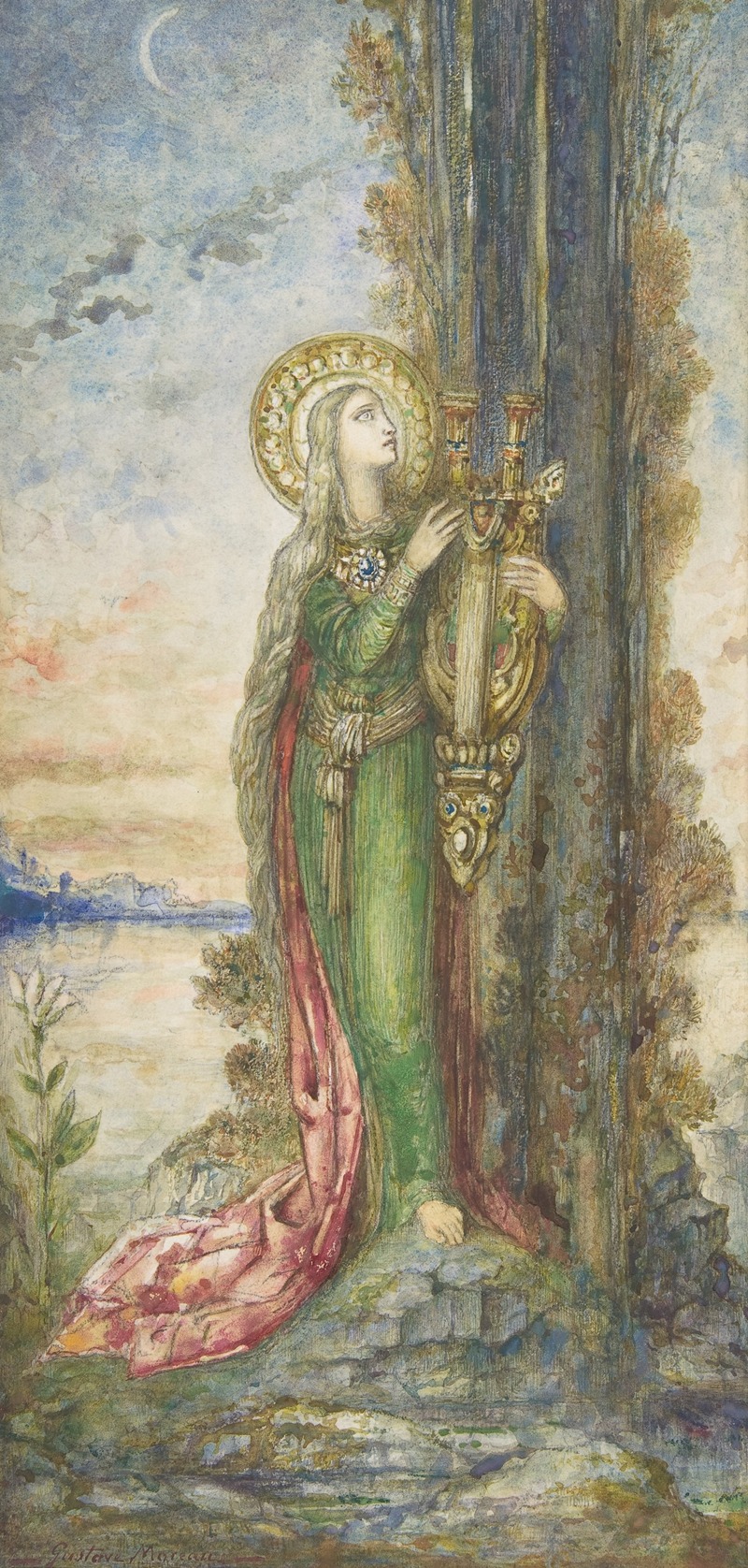
A hand-painted replica of Gustave Moreau’s masterpiece Saint Cecilia, meticulously crafted by professional artists to capture the true essence of the original. Each piece is created with museum-quality canvas and rare mineral pigments, carefully painted by experienced artists with delicate brushstrokes and rich, layered colors to perfectly recreate the texture of the original artwork. Unlike machine-printed reproductions, this hand-painted version brings the painting to life, infused with the artist’s emotions and skill in every stroke. Whether for personal collection or home decoration, it instantly elevates the artistic atmosphere of any space.
Gustave Moreau's "Saint Cecilia" is a notable painting by the French Symbolist artist, who is renowned for his intricate and imaginative works that often draw on mythological and religious themes. Moreau, born in 1826 and active during the 19th century, was a pivotal figure in the Symbolist movement, which sought to express ideas and emotions through symbolic imagery and themes, often with a focus on the mystical and the otherworldly.
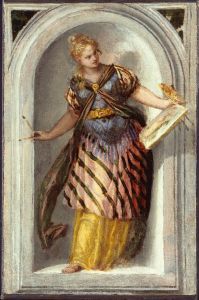
"Saint Cecilia" depicts the Christian saint who is venerated as the patroness of musicians. According to Christian tradition, Saint Cecilia was a Roman martyr of the early church, celebrated for her piety and her association with music. She is often portrayed with musical instruments, particularly the organ, which has become a symbol of her connection to music and the arts.
In Moreau's rendition, Saint Cecilia is typically depicted in a manner that emphasizes her ethereal and divine qualities, consistent with Moreau's style that often imbues his subjects with a sense of mysticism and transcendence. The painting likely features rich, detailed textures and a palette that highlights Moreau's skill in creating luminous and intricate compositions. His work is characterized by a meticulous attention to detail and a penchant for incorporating elaborate decorative elements, which can be seen in the ornate garments and settings that often accompany his figures.
Moreau's approach to religious subjects like Saint Cecilia is not merely illustrative but rather interpretative, aiming to evoke the spiritual and symbolic significance of the figure. His paintings often invite viewers to contemplate the deeper meanings and emotions associated with the subjects, rather than simply presenting a narrative or historical account.
The painting of Saint Cecilia by Moreau fits within his broader oeuvre, which frequently explores themes of martyrdom, sanctity, and the intersection of the divine and the human. Moreau's works are known for their dreamlike quality, where reality and imagination blend seamlessly, creating a space where viewers can engage with the symbolic and the mystical.
Gustave Moreau's influence extended beyond his own time, impacting later artists and movements, particularly the Symbolists and Surrealists, who admired his ability to convey complex ideas through symbolic imagery. His works, including "Saint Cecilia," continue to be studied and appreciated for their artistic and thematic depth.
Moreau's legacy is preserved in part through the Musée Gustave Moreau in Paris, which houses a significant collection of his works and provides insight into his artistic process and vision. The museum, once Moreau's home and studio, offers a comprehensive view of his contributions to the art world and his enduring influence on subsequent generations of artists.
In summary, Gustave Moreau's "Saint Cecilia" exemplifies his mastery of Symbolist art, combining religious iconography with a unique, imaginative style that invites viewers to explore the spiritual and symbolic dimensions of the subject.