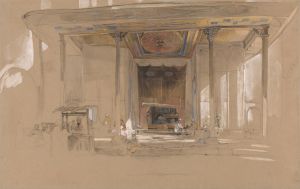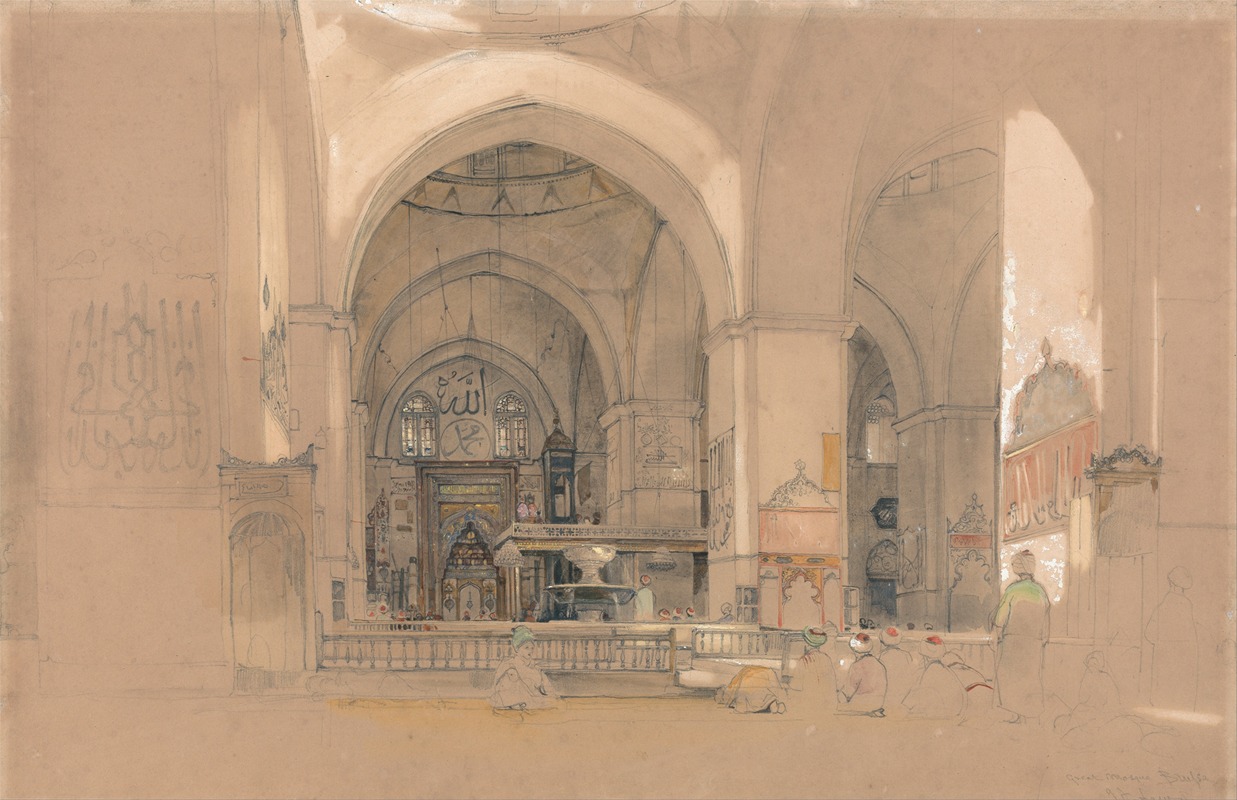
Interior of the Great Mosque, Bursa, Turkey
A hand-painted replica of John Frederick Lewis’s masterpiece Interior of the Great Mosque, Bursa, Turkey, meticulously crafted by professional artists to capture the true essence of the original. Each piece is created with museum-quality canvas and rare mineral pigments, carefully painted by experienced artists with delicate brushstrokes and rich, layered colors to perfectly recreate the texture of the original artwork. Unlike machine-printed reproductions, this hand-painted version brings the painting to life, infused with the artist’s emotions and skill in every stroke. Whether for personal collection or home decoration, it instantly elevates the artistic atmosphere of any space.
"Interior of the Great Mosque, Bursa, Turkey" is a watercolor painting created by the British artist John Frederick Lewis in 1869. Lewis, known for his detailed and vibrant depictions of Orientalist themes, was a prominent figure in the 19th-century British art scene. His works often reflect his extensive travels in the Middle East and North Africa, where he spent a significant portion of his career.
The painting captures the interior of the Great Mosque, also known as Ulu Cami, located in Bursa, Turkey. The Great Mosque is one of the most significant examples of early Ottoman architecture and was completed in 1399 under the commission of Sultan Bayezid I. The mosque is renowned for its large size, featuring twenty domes arranged in four rows of five, supported by twelve columns. It is also famous for its intricate calligraphy and the serene atmosphere it provides to worshippers and visitors alike.
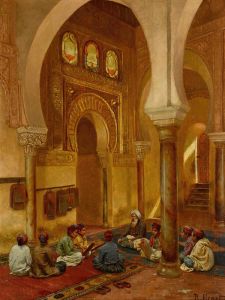
Lewis's depiction of the mosque interior is characterized by meticulous attention to detail and a vibrant use of color, which brings the scene to life. The painting shows a spacious and grand interior, with worshippers engaged in prayer and contemplation. The architectural elements, such as the domes, arches, and columns, are rendered with precision, highlighting the grandeur and elegance of the mosque's design. The use of light and shadow in the painting enhances the depth and three-dimensionality of the space, creating a sense of immersion for the viewer.
John Frederick Lewis's interest in Orientalist subjects was part of a broader trend in 19th-century European art, where artists were fascinated by the cultures and landscapes of the Middle East and North Africa. His works are noted for their authenticity and respect for the subjects he depicted, often based on his personal experiences and observations during his travels. Lewis lived in Cairo for nearly a decade, from 1841 to 1851, where he immersed himself in the local culture and produced many of his most famous works.
"Interior of the Great Mosque, Bursa, Turkey" is a testament to Lewis's skill as a watercolorist and his ability to capture the essence of the places he visited. The painting is part of the collection of the Victoria and Albert Museum in London, which houses a significant number of Lewis's works. The museum's collection provides valuable insights into the artist's oeuvre and the broader context of 19th-century Orientalist art.
In summary, John Frederick Lewis's "Interior of the Great Mosque, Bursa, Turkey" is a masterful watercolor painting that offers a detailed and vibrant portrayal of one of Turkey's most important religious and architectural landmarks. The work reflects Lewis's deep appreciation for the cultures he encountered and his exceptional talent in capturing their beauty and complexity through his art.