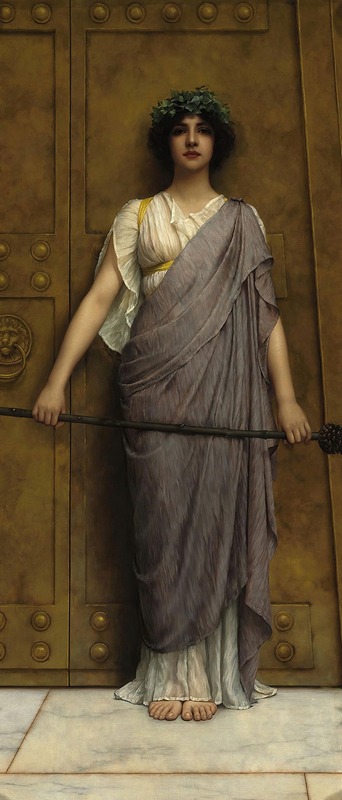
At the Gate of the Temple
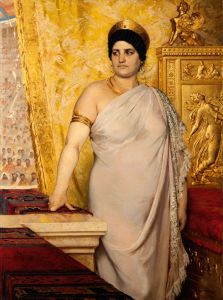
A hand-painted replica of John William Godward’s masterpiece At the Gate of the Temple, meticulously crafted by professional artists to capture the true essence of the original. Each piece is created with museum-quality canvas and rare mineral pigments, carefully painted by experienced artists with delicate brushstrokes and rich, layered colors to perfectly recreate the texture of the original artwork. Unlike machine-printed reproductions, this hand-painted version brings the painting to life, infused with the artist’s emotions and skill in every stroke. Whether for personal collection or home decoration, it instantly elevates the artistic atmosphere of any space.
John William Godward was a British painter born in 1861, known for his classical style and meticulous attention to detail. He was part of the late 19th-century Neoclassical movement, which sought to revive the classical art forms of ancient Greece and Rome. Godward's works are characterized by their serene beauty, classical themes, and the use of rich colors and textures.
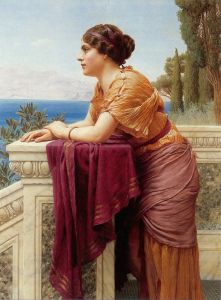
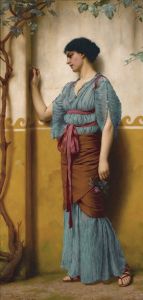
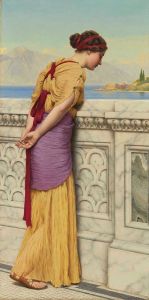
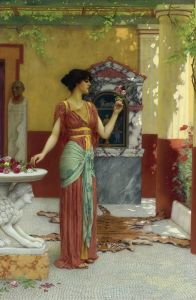
"At the Gate of the Temple" is one of Godward's many paintings that exemplify his fascination with the classical world. Although specific details about this painting are scarce, it is consistent with Godward's typical style, which often features solitary female figures in classical settings. His subjects are usually depicted in contemplative poses, surrounded by elements of classical architecture and lush landscapes.
Godward's technique was heavily influenced by the works of Sir Lawrence Alma-Tadema, another prominent Neoclassical painter of the time. Like Alma-Tadema, Godward paid great attention to the depiction of marble and other luxurious materials, creating a sense of opulence and timelessness in his paintings. His use of color and light further enhances the ethereal quality of his work, drawing viewers into a world of idealized beauty.
The themes in Godward's paintings often revolve around the concepts of beauty, tranquility, and the idealized human form. His works are devoid of the social and political commentary that characterized much of the art of his contemporaries, focusing instead on the aesthetic and the eternal. This focus on beauty for its own sake was both a strength and a limitation, as it set Godward apart from the more modernist movements that were emerging at the time.
Godward's career was marked by a degree of isolation from the mainstream art world. He was known to be a reclusive figure, preferring to immerse himself in his work rather than engage with the social aspects of the art community. This isolation may have contributed to the lack of widespread recognition during his lifetime, although his work has gained appreciation in the years following his death.
"At the Gate of the Temple," like many of Godward's paintings, reflects his dedication to the classical ideal and his skill in bringing that vision to life on canvas. The painting invites viewers to step into a world where beauty and serenity reign, offering a glimpse into the artist's vision of a perfect, timeless realm.
In summary, while specific information about "At the Gate of the Temple" is limited, it is representative of John William Godward's broader body of work. His paintings continue to be celebrated for their technical excellence and their ability to transport viewers to a world of classical beauty.



![Fujisawa; Yugyôji [temple name]](/imgs/213015/s/ando-hiroshige-fujisawa-yugyoji-temple-name-73299045.jpg)