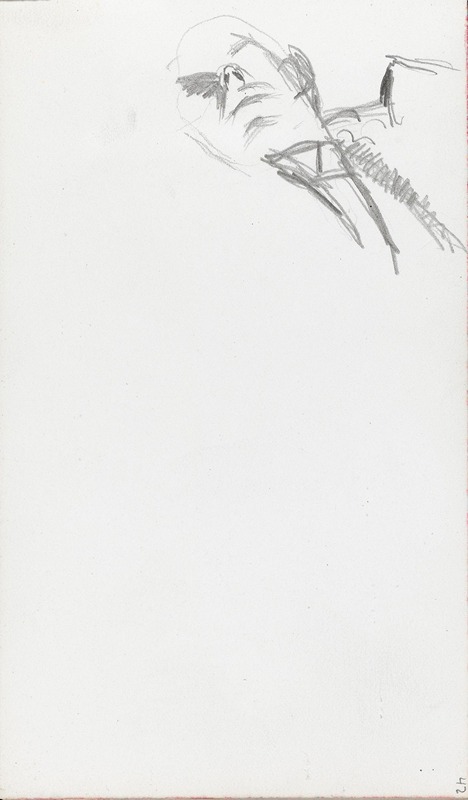
Liggende hode
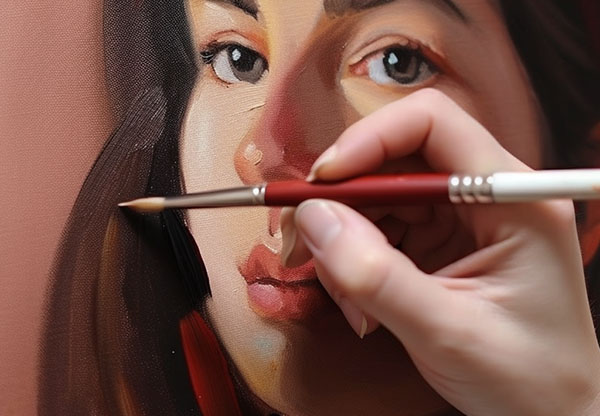
A hand-painted replica of Ludvig Karsten’s masterpiece Liggende hode, meticulously crafted by professional artists to capture the true essence of the original. Each piece is created with museum-quality canvas and rare mineral pigments, carefully painted by experienced artists with delicate brushstrokes and rich, layered colors to perfectly recreate the texture of the original artwork. Unlike machine-printed reproductions, this hand-painted version brings the painting to life, infused with the artist’s emotions and skill in every stroke. Whether for personal collection or home decoration, it instantly elevates the artistic atmosphere of any space.
Ludvig Karsten (1876–1926) was a Norwegian painter known for his vibrant use of color and dynamic compositions. He was part of the early 20th-century Norwegian art scene and was influenced by both Impressionism and Expressionism. Karsten's work often depicted everyday scenes and portraits, characterized by bold brushwork and a vivid palette.
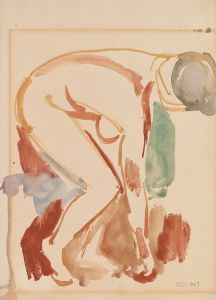
One of Karsten's notable works is "Liggende hode" (translated as "Reclining Head"). This painting exemplifies Karsten's skill in capturing the human form with expressive and emotive qualities. While specific details about the painting "Liggende hode" are limited, it is consistent with Karsten's broader oeuvre, which often focused on the human figure and explored themes of intimacy and emotion.
Karsten's approach to painting was heavily influenced by his time in Paris, where he was exposed to the works of the Impressionists and Post-Impressionists. This exposure is evident in his use of light and color, which he employed to convey mood and atmosphere rather than to adhere strictly to realistic representation. His work often features loose, gestural brushstrokes that suggest movement and vitality, a technique that can be seen in "Liggende hode."
Throughout his career, Karsten was associated with other prominent Norwegian artists, such as Edvard Munch, and was part of a broader movement that sought to modernize Norwegian art by incorporating international influences. Despite his relatively short life, Karsten's impact on Norwegian art was significant, as he pushed the boundaries of traditional painting techniques and embraced a more modern, expressive style.
Karsten's personal life was as colorful as his paintings. Known for his bohemian lifestyle, he often found himself at odds with societal norms, which sometimes overshadowed his artistic achievements. Nevertheless, his work has been recognized for its contribution to the development of modern art in Norway.
"Reclining Head" fits within this context as an example of Karsten's ability to blend traditional portraiture with modernist techniques. The painting likely captures a moment of introspection or rest, with the subject's features rendered in a way that emphasizes their emotional state rather than precise anatomical detail. This focus on the psychological aspect of his subjects is a hallmark of Karsten's work.
Today, Ludvig Karsten is remembered as a pioneering figure in Norwegian art, whose works are held in various collections, including the National Museum of Art, Architecture and Design in Oslo. His paintings continue to be studied for their innovative use of color and form, as well as their contribution to the broader narrative of modern art in the early 20th century.
While specific exhibitions or critical receptions of "Liggende hode" are not extensively documented, the painting remains an important part of Karsten's legacy, illustrating his unique approach to capturing the essence of his subjects through a modernist lens.