Starlings in the rain
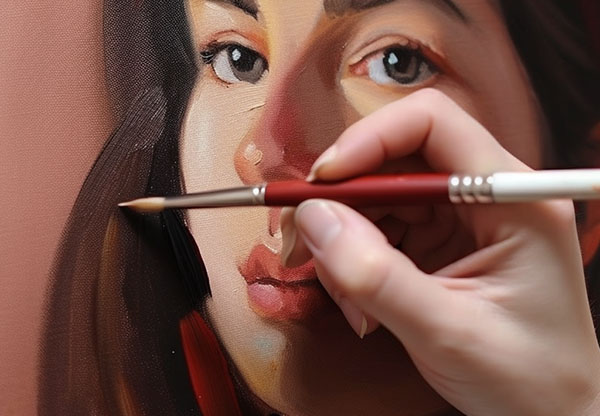
A hand-painted replica of Ohara Koson’s masterpiece Starlings in the rain, meticulously crafted by professional artists to capture the true essence of the original. Each piece is created with museum-quality canvas and rare mineral pigments, carefully painted by experienced artists with delicate brushstrokes and rich, layered colors to perfectly recreate the texture of the original artwork. Unlike machine-printed reproductions, this hand-painted version brings the painting to life, infused with the artist’s emotions and skill in every stroke. Whether for personal collection or home decoration, it instantly elevates the artistic atmosphere of any space.
Ohara Koson (1877–1945) was a Japanese artist known for his exquisite woodblock prints, particularly those depicting birds and flowers. One of his notable works is "Starlings in the Rain," which exemplifies his skill in capturing the delicate beauty of nature through the traditional Japanese woodblock printing technique known as ukiyo-e.
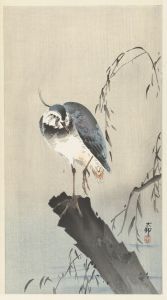
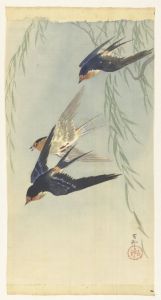
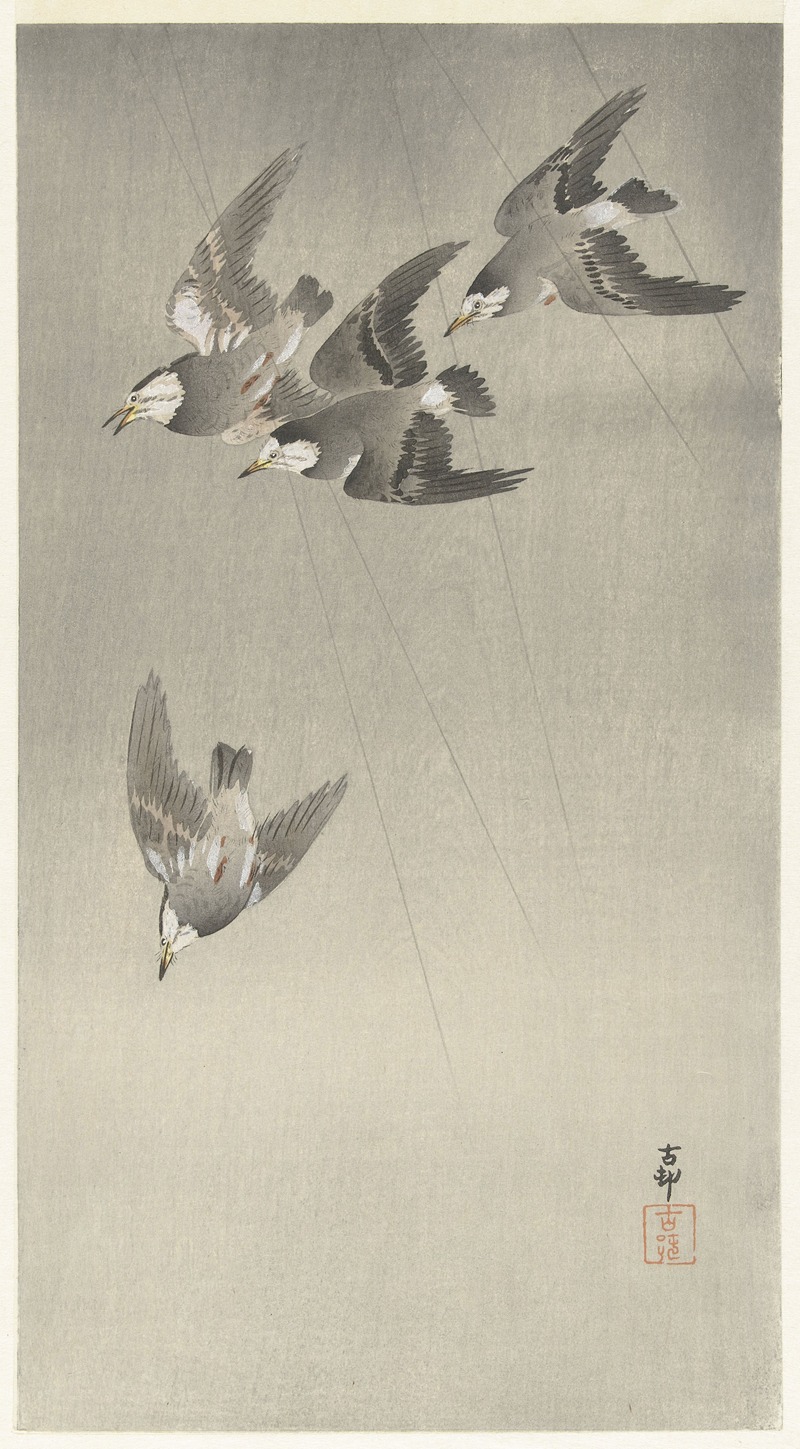
"Starlings in the Rain" portrays a serene and atmospheric scene of starlings perched on a branch amidst a gentle rainfall. The composition is characterized by its simplicity and elegance, typical of Koson's style. The birds are depicted with meticulous detail, showcasing their feathers and natural postures, while the rain is rendered with fine lines that create a sense of movement and tranquility.
Koson's work is part of the shin-hanga (new prints) movement, which emerged in the early 20th century as a revival of the ukiyo-e tradition. This movement sought to blend traditional Japanese art techniques with Western influences, particularly in the use of light and shadow, to appeal to both Japanese and international audiences. Koson, also known by his other artist names Shoson and Hoson, was one of the prominent figures in this movement, and his prints gained popularity both in Japan and abroad.
"Starlings in the Rain" reflects Koson's ability to convey the subtleties of nature and the transient beauty of a moment. His use of color is restrained yet effective, with muted tones that enhance the mood of the scene. The composition's vertical format and the placement of the birds and branches create a harmonious balance, drawing the viewer's eye through the artwork.
Koson's prints were often produced in collaboration with publishers such as Watanabe Shozaburo, who played a significant role in promoting shin-hanga artists. These collaborations helped Koson's work reach a wider audience, particularly in the United States and Europe, where there was a growing interest in Japanese art during the early 20th century.
The appeal of "Starlings in the Rain" lies in its ability to evoke a sense of peace and contemplation. The depiction of birds in Japanese art often carries symbolic meanings, such as freedom, grace, and the changing seasons. In this work, the starlings can be seen as a representation of resilience and adaptability, enduring the rain with a quiet strength.
Koson's attention to detail and his mastery of the woodblock printing technique are evident in "Starlings in the Rain." Each element of the print, from the texture of the feathers to the delicate lines of the rain, is rendered with precision and care. This dedication to craftsmanship is a hallmark of Koson's work and contributes to the enduring appeal of his prints.
Today, "Starlings in the Rain" is appreciated by collectors and art enthusiasts for its beauty and technical excellence. It stands as a testament to Ohara Koson's legacy as a master of the shin-hanga movement and his contribution to the rich tradition of Japanese woodblock printing.