Napoleon Crossing the Alps
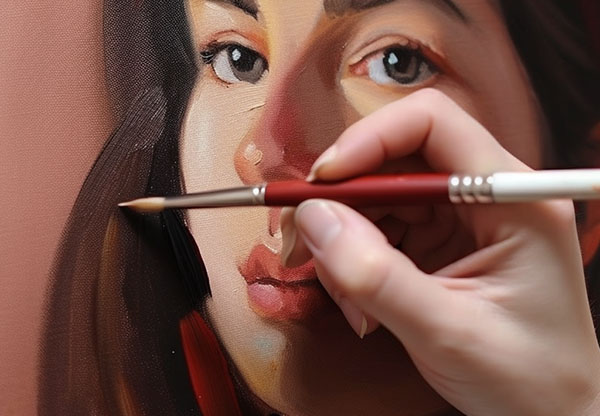
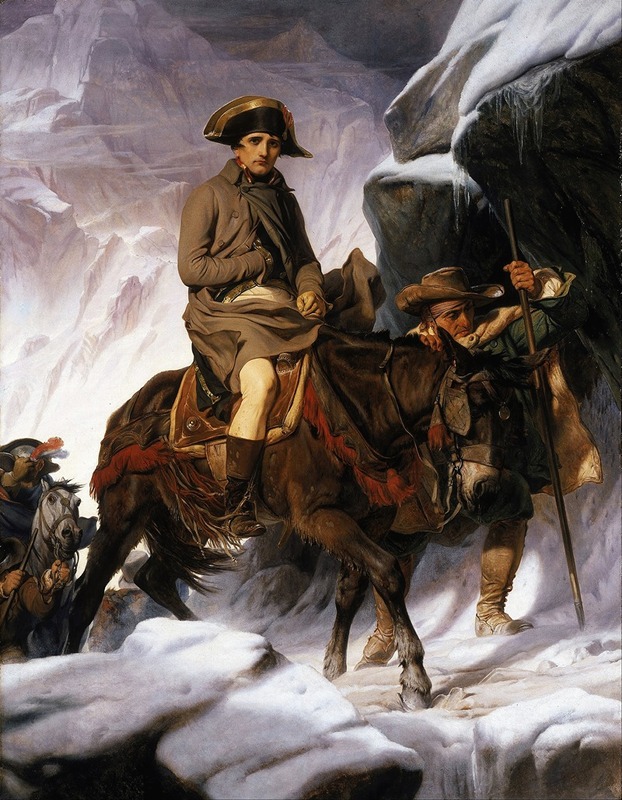
A hand-painted replica of Paul Delaroche’s masterpiece Napoleon Crossing the Alps, meticulously crafted by professional artists to capture the true essence of the original. Each piece is created with museum-quality canvas and rare mineral pigments, carefully painted by experienced artists with delicate brushstrokes and rich, layered colors to perfectly recreate the texture of the original artwork. Unlike machine-printed reproductions, this hand-painted version brings the painting to life, infused with the artist’s emotions and skill in every stroke. Whether for personal collection or home decoration, it instantly elevates the artistic atmosphere of any space.
Napoleon Crossing the Alps is an 1848 painting by French artist Paul Delaroche. The work is a reinterpretation of the famous equestrian portraits of Napoleon Bonaparte crossing the Alps, most notably the idealized versions painted by Jacques-Louis David in the early 19th century. Delaroche's painting stands out for its stark realism and departure from the heroic and romanticized depictions of Napoleon that were common during and shortly after his reign.
In Delaroche's version, Napoleon is portrayed as a weary and pragmatic leader rather than a glorified conqueror. He is shown dressed in a heavy, dark overcoat and riding a mule, rather than a rearing warhorse. His expression is somber and introspective, reflecting the harsh realities of the military campaign rather than the triumphalism often associated with his image. The mule, a practical choice for traversing the treacherous Alpine terrain, further emphasizes the realism of the scene. This depiction contrasts sharply with David's iconic paintings, where Napoleon is shown in a dramatic pose, wearing a flowing cape and riding a spirited horse.
The painting was commissioned by the Duke of Orleans, a member of the French royal family, and was created during a period when the image of Napoleon was being reassessed in France. By the mid-19th century, the romanticized view of Napoleon had given way to a more critical and nuanced understanding of his legacy. Delaroche's work reflects this shift, presenting a more humanized and less idealized portrayal of the French leader.
The setting of the painting is stark and cold, with the rugged Alpine landscape dominating the background. The muted color palette and the detailed rendering of the rocky terrain contribute to the painting's somber and realistic tone. The composition focuses on Napoleon and his mule, with little embellishment or extraneous detail, drawing attention to the figure's isolation and the arduous nature of the journey.
Delaroche's Napoleon Crossing the Alps was well-received for its originality and realism, though it also sparked debate for its unflattering portrayal of Napoleon. The painting is often seen as a counterpoint to the propagandistic art of the Napoleonic era, offering a more grounded and critical perspective on one of history's most iconic figures. Today, it is regarded as an important work in the history of 19th-century French art, illustrating the evolving attitudes toward Napoleon and the broader shift toward realism in art during this period.