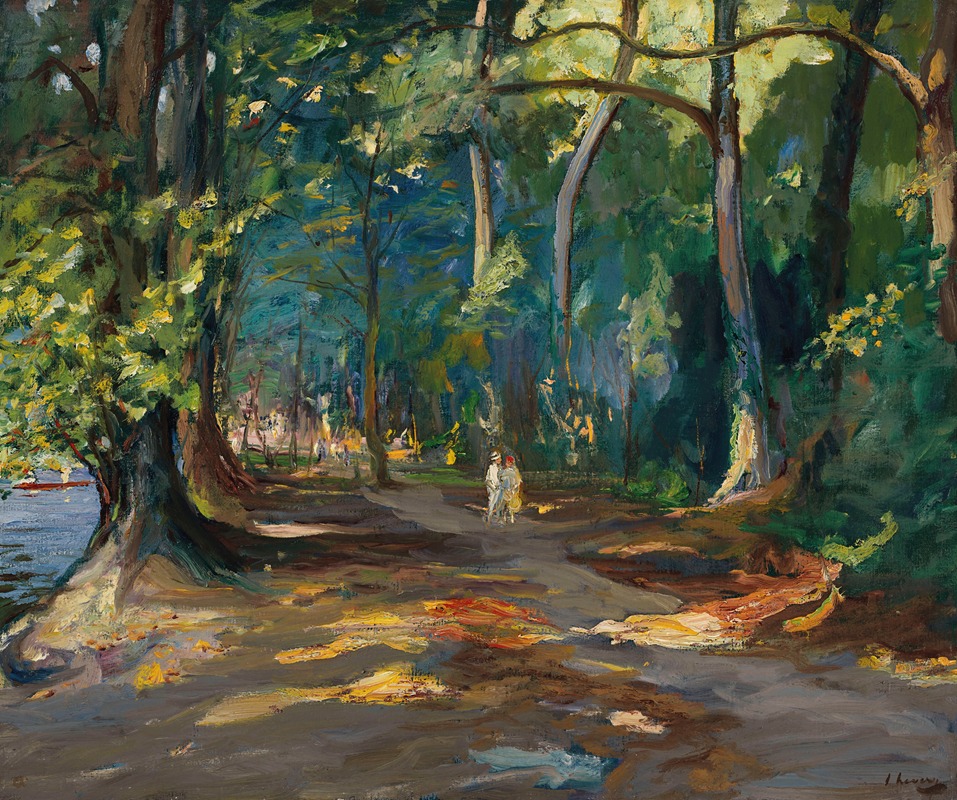
The Path by the River, Maidenhead
A hand-painted replica of Sir John Lavery’s masterpiece The Path by the River, Maidenhead, meticulously crafted by professional artists to capture the true essence of the original. Each piece is created with museum-quality canvas and rare mineral pigments, carefully painted by experienced artists with delicate brushstrokes and rich, layered colors to perfectly recreate the texture of the original artwork. Unlike machine-printed reproductions, this hand-painted version brings the painting to life, infused with the artist’s emotions and skill in every stroke. Whether for personal collection or home decoration, it instantly elevates the artistic atmosphere of any space.
Sir John Lavery's painting "The Path by the River, Maidenhead" is a notable work by the renowned Irish painter, celebrated for his contributions to portrait and landscape painting. Lavery, born in Belfast in 1856, became a significant figure in the British art scene, particularly known for his impressionistic style and his ability to capture the subtleties of light and atmosphere.
"The Path by the River, Maidenhead" exemplifies Lavery's skill in landscape painting, a genre in which he excelled alongside his more famous portraiture work. This painting captures a serene scene along the River Thames in Maidenhead, a town in Berkshire, England. Maidenhead was a popular destination during the late 19th and early 20th centuries, known for its picturesque landscapes and as a retreat for those seeking the tranquility of the English countryside.
Lavery's depiction of the river path is characterized by his use of light and color, which imbues the scene with a sense of calm and natural beauty. The painting likely reflects Lavery's interest in capturing the everyday beauty of the world around him, a hallmark of his landscape work. His brushwork in this piece, as in many of his landscapes, is loose and fluid, allowing him to convey the movement of water and the gentle sway of trees and foliage.
The composition of "The Path by the River, Maidenhead" draws the viewer's eye along the path, inviting them to journey into the painting. This technique is typical of Lavery's landscapes, where he often used natural elements to guide the viewer's gaze and create a sense of depth and perspective. The use of light in the painting is particularly noteworthy, as Lavery was adept at capturing the changing effects of sunlight and shadow, lending his works a dynamic quality that changes with the viewer's perspective.
Lavery's work during this period was influenced by the Impressionist movement, which emphasized the depiction of light and its changing qualities. While he was not strictly an Impressionist, Lavery incorporated elements of the style into his work, particularly in his landscapes. This influence is evident in "The Path by the River, Maidenhead," where the interplay of light and color creates a vivid and atmospheric scene.
Throughout his career, Lavery received numerous accolades and was highly regarded by his contemporaries. He was elected a member of the Royal Academy and was knighted in 1918 for his contributions to art. His works are held in high esteem and continue to be celebrated for their technical skill and artistic beauty.
"The Path by the River, Maidenhead" remains a testament to Lavery's ability to capture the essence of a place and moment in time. It reflects his mastery of landscape painting and his enduring legacy as one of the leading artists of his generation. The painting is a fine example of Lavery's work and continues to be appreciated by art enthusiasts and historians alike for its serene beauty and technical excellence.