L’emotionnée
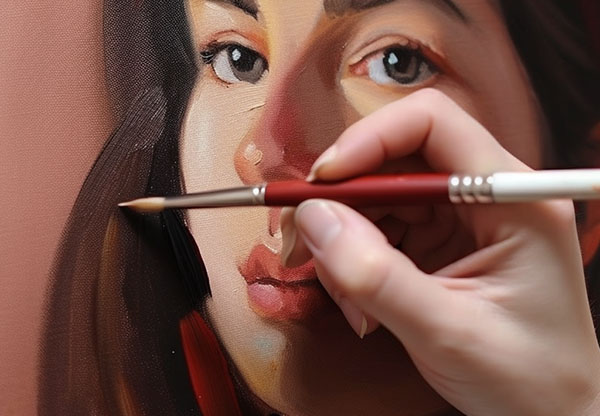
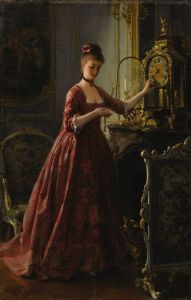
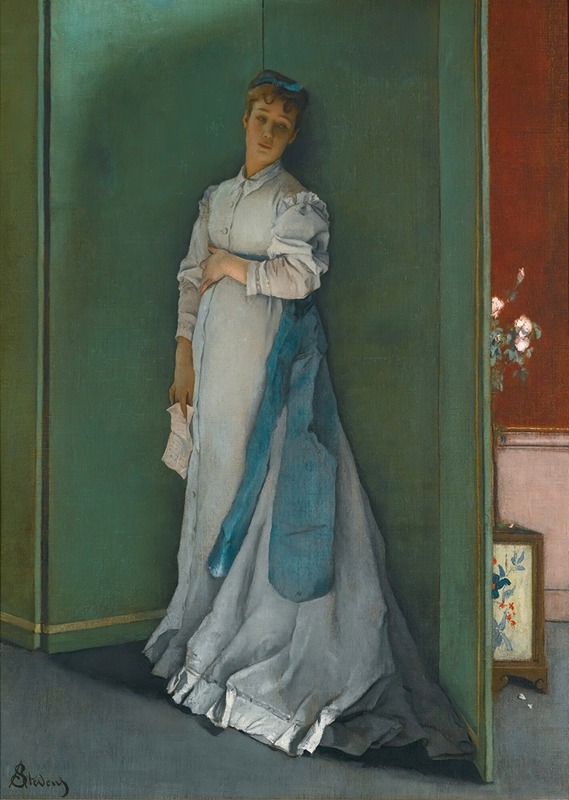
A hand-painted replica of Alfred Stevens’s masterpiece L’emotionnée, meticulously crafted by professional artists to capture the true essence of the original. Each piece is created with museum-quality canvas and rare mineral pigments, carefully painted by experienced artists with delicate brushstrokes and rich, layered colors to perfectly recreate the texture of the original artwork. Unlike machine-printed reproductions, this hand-painted version brings the painting to life, infused with the artist’s emotions and skill in every stroke. Whether for personal collection or home decoration, it instantly elevates the artistic atmosphere of any space.
Alfred Stevens, a renowned Belgian painter of the 19th century, is celebrated for his exquisite portrayals of women in elegant settings. One of his notable works is "L’emotionnée," which exemplifies his mastery in capturing the subtleties of emotion and the refined beauty of his subjects. Stevens was born in Brussels in 1823 and became a pivotal figure in the art world, particularly known for his ability to blend realism with a touch of Impressionism, a style that was emerging during his lifetime.
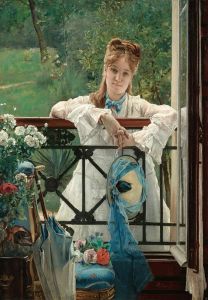
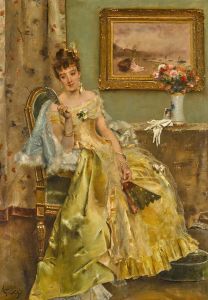
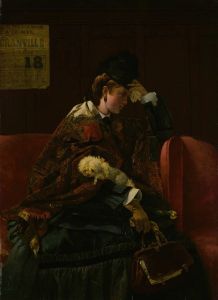
"L’emotionnée" is a testament to Stevens' skill in depicting the intricate details of fashion and the nuanced expressions of his subjects. The painting showcases a woman, elegantly dressed, embodying the grace and sophistication typical of Stevens' work. His attention to detail is evident in the delicate rendering of fabrics and the careful composition of the scene, which draws the viewer into the intimate world of the subject.
Stevens' work often reflects the societal norms and cultural milieu of his time, particularly the role and perception of women in the 19th-century bourgeois society. "L’emotionnée" is no exception, as it captures the quiet dignity and introspective nature of its subject, inviting viewers to ponder the emotions and thoughts that lie beneath the surface. This focus on the inner life of his subjects was a hallmark of Stevens' portraits, setting him apart from many of his contemporaries.
Throughout his career, Stevens was influenced by both the academic traditions of his early training and the burgeoning modernist movements. He studied at the Académie Royale des Beaux-Arts in Brussels and later in Paris, where he was exposed to the works of artists like Gustave Courbet and Édouard Manet. This exposure helped Stevens develop a unique style that combined the precision of academic painting with a more modern sensibility.
"L’emotionnée" is part of Stevens' broader oeuvre that often features women in domestic or leisurely settings, reflecting the artist's fascination with the private lives and emotional states of his subjects. His paintings are characterized by their rich color palettes, meticulous attention to detail, and the ability to convey a sense of narrative through a single image.
Alfred Stevens enjoyed considerable success during his lifetime, receiving numerous accolades and exhibiting widely across Europe. His works were particularly popular in Paris, where he spent much of his career. Despite the changing tastes in art towards the end of the 19th century, Stevens' paintings continued to be appreciated for their technical brilliance and emotional depth.
Today, "L’emotionnée" and other works by Stevens are held in high regard, with many pieces housed in major museums and private collections around the world. His contribution to the art world is recognized for its unique blend of realism and modernity, as well as its insightful portrayal of the complexities of human emotion. Through paintings like "L’emotionnée," Alfred Stevens has left a lasting legacy that continues to captivate and inspire audiences.