Male Nude
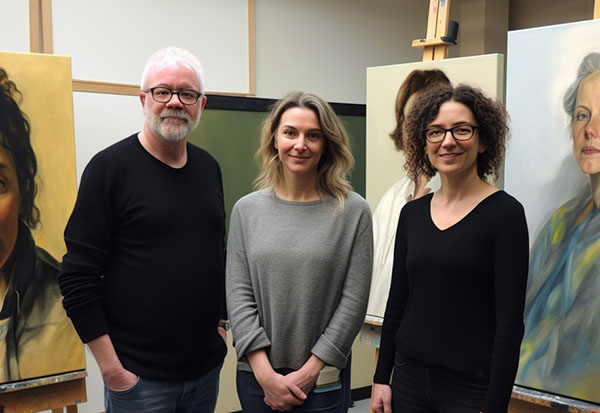
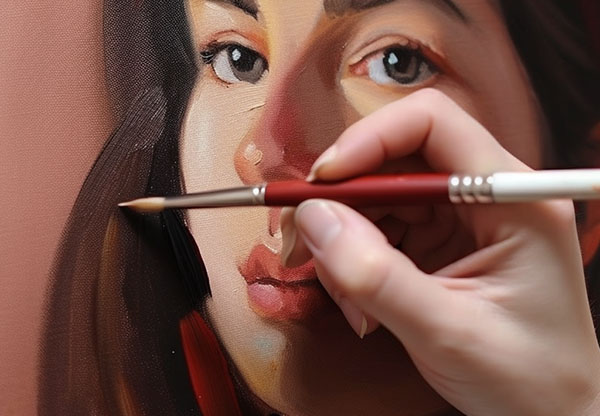
A hand-painted replica of Edvard Munch’s masterpiece Male Nude, meticulously crafted by professional artists to capture the true essence of the original. Each piece is created with museum-quality canvas and rare mineral pigments, carefully painted by experienced artists with delicate brushstrokes and rich, layered colors to perfectly recreate the texture of the original artwork. Unlike machine-printed reproductions, this hand-painted version brings the painting to life, infused with the artist’s emotions and skill in every stroke. Whether for personal collection or home decoration, it instantly elevates the artistic atmosphere of any space.
"Male Nude" is a painting by the Norwegian artist Edvard Munch, who is best known for his iconic work "The Scream." Munch was a pivotal figure in the Symbolist and Expressionist movements, and his works often explore themes of existential angst, human emotion, and the human condition.
"Male Nude" was created in 1915, a period when Munch was deeply engaged in exploring the human form and its expressive potential. This painting is part of a broader series of works where Munch focused on the nude figure, both male and female, to delve into the complexities of human vulnerability and strength.
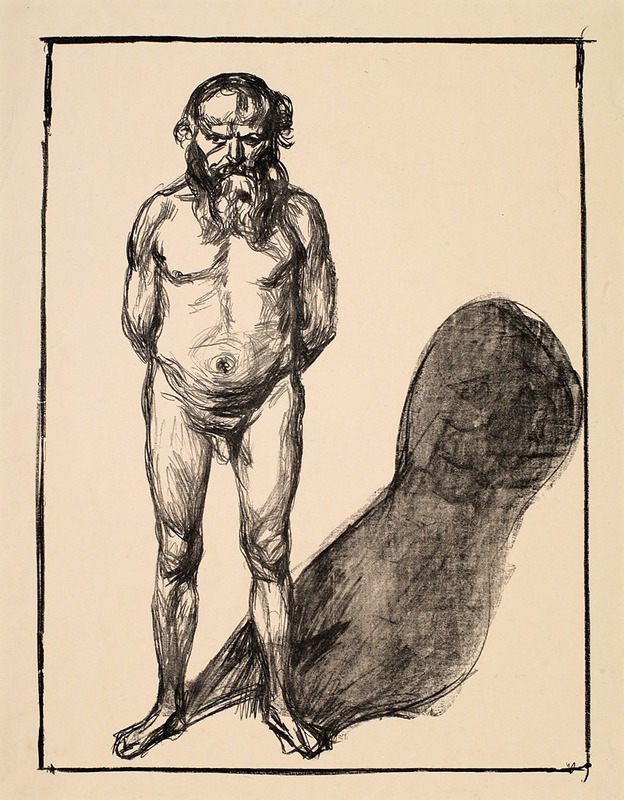
The painting depicts a male figure, unclothed, standing in a somewhat relaxed yet introspective pose. The background is relatively simple, allowing the viewer's attention to remain focused on the subject. Munch's use of color and brushwork in "Male Nude" is characteristic of his style during this period, with bold, expressive strokes and a somewhat muted palette that emphasizes the emotional tone of the piece.
Munch's interest in the nude form can be traced back to his early years as an artist, but it became more pronounced in his later works. His approach to the human body was not merely anatomical but deeply psychological, aiming to capture the inner life of his subjects. In "Male Nude," this is evident in the way the figure's posture and expression convey a sense of introspection and perhaps vulnerability.
The painting reflects Munch's broader concerns with themes of identity, mortality, and the human psyche. By presenting the male figure in a state of undress, Munch strips away the external markers of identity, inviting the viewer to consider the universal aspects of the human experience. This approach aligns with the Symbolist movement's focus on exploring deeper truths and the inner workings of the mind.
"Male Nude" is housed in the Munch Museum in Oslo, Norway, which holds the largest collection of Munch's works. The museum provides valuable context for understanding Munch's artistic development and the various phases of his career. The painting is an important example of Munch's exploration of the human form and his ability to convey complex emotional states through his art.
Edvard Munch's contributions to modern art are significant, and his works continue to be studied and appreciated for their emotional depth and innovative use of color and form. "Male Nude" is a testament to his skill in capturing the essence of the human condition, making it a noteworthy piece within his extensive oeuvre.